

The long-term fix
for peeling exterior paint
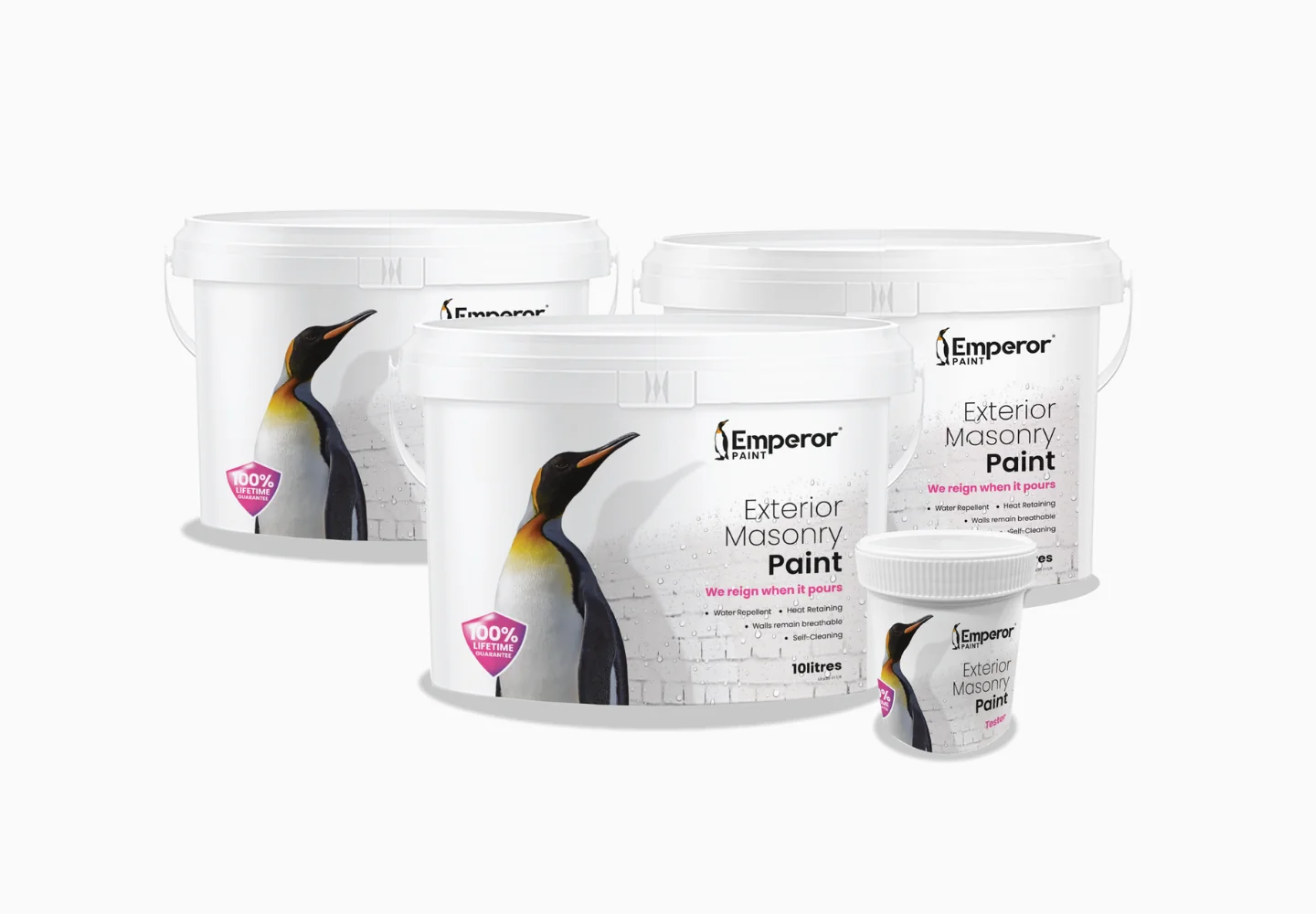
Stop the cycle of blistering and peeling paint on your exterior walls. Emperor Masonry Paint is engineered to stop the cause, so you never have to repaint again.
Why paint fails
Moisture is the main cause of peeling exterior paint.
With UK winters becoming significantly wetter over recent decades, exterior walls face more frequent and intense rainfall than standard masonry paints were designed to handle.

Water gets in
Rain absorbs into paint and soaks into your exterior walls.

It gets trapped
Many masonry paints don’t let enough moisture escape, so it becomes trapped inside your wall.

Paint peels
Trapped moisture builds over time, forcing the paint away from the surface.

You keep repainting
The problem isn’t fixed, so you’re back repainting again in a few years and the cycle repeats.
Paints force a compromise
To manage moisture effectively, a masonry paint needs to prevent water getting in, but allow the surface to naturally breathe. The problem is, the traditional options when it comes to painting exterior walls often fall short and force you to compromise.
Limewash
Breathability: Very high
Weather resistance: Low
Lets moisture escape well, but weathers off after 1-3 years and offers limited protection against heavy rain.
Oil-based masonry paint
Breathability: Low
Weather resistance: High
Resists rain well, but traps moisture inside the wall, increasing the risk of damp, peeling and damage over time.
Standard masonry paint
Breathability: Moderate
Weather resistance: Moderate
Typically acrylic-based. Sits between both, but often isn't highly effective at keeping rain out or naturally letting water vapour escape.
Expert insight From our Technical Team
“Peeling can also be caused by poor surface preparation, incompatible coatings or applying paint in unsuitable conditions. These all generally show quickly after application, in a matter of months. However, in most cases we see, moisture within the wall is the underlying cause. Learn more about why paint peels.”
ML
Michael L, Technical Director at Emperor Paint – Over 25 years experience in the building industry.
The next generation of exterior paint
Exterior paint hasn’t kept up with the demands of modern UK weather.
That’s why Emperor Masonry Paint, using advanced nano-technology is engineered to specifically to manage moisture properly and stop the problem at its source.
Engineered so paint never peels
Standard masonry paint allows rain to sit on the surface, which is why it gradually soaks in over time, while also sealing the surface and trapping that moisture underneath the paint film.
With Emperor Masonry Paint, rain hits it simply rolls off, while water vapour can freely escape.
That means there is no build-up of moisture, so no peeling.

How it works
Most masonry paints force a compromise between keeping water out and letting walls breathe. Emperor Masonry Paint is built differently using cutting-edge nano-technology.
Within the paint are millions of microscopic pyramids with tiny gaps between them.
Imagine trying to balance a ball on the tip of a pencil. The same thing happens when rain hits your wall. It can’t stick to the surface so it forms droplets and rolls away instead. That’s what is known as a super hydrophobic surface, something not seen in standard masonry paint.
But here’s what makes it genuinely different. Liquid water can’t force its way through those gaps, but water vapour molecules are far smaller and pass through freely.
So while rain rolls off the outside, moisture that’s already in your wall can still escape. That is how the surface stays highly breathable, even as it repels water.
This is what allows Emperor Masonry Paint to keep exterior walls dry and prevent the build-up of moisture that causes paint to peel.
 |
Super hydrophobic – rain rolls off without soaking in |
|
SD breathability value of 0.03 – comparable to limewash, so pores stay open |
|
Chemically bonds to the wall – not just a film on the surface |
Proven, tested and guaranteed
Durability claims on masonry paints are usually based on expected performance, not long-term, independent testing.
We wanted to understand how Emperor Masonry Paint would actually perform over time, so it was independently tested by a UKAS accredited laboratory using accelerated weathering.
The paint was subjected to repeated cycles of rain, temperature and environmental stress to replicate 25 years of harsh UK conditions. After the 25 years of equivalent weathering, there were no signs of change in performance or appearance.
That result is why we are confident it will go beyond this proven performance that we offer a lifetime guarantee from peeling, flaking or blistering.
25 year accelerated weathering results
No peeling. No change in appearance. No loss of performance.

Invest once, save for years
Painting again and again
The price on the tin doesn’t reflect the true cost. Standard masonry paints sometimes begin to fail within a few years. Over a 25 year period, that can mean repainting your home four or five times.
The cost adds up
What looks like the cheaper option quickly becomes more expensive, multiplying the cost, the inconvenience and the effort in a way that turns the ‘cheap’ option into the expensive one.
Paint once, stay protected
With Emperor Masonry Paint you pay once, save yourself money and enjoy the peace of mind knowing your home is protected for at least 25 years.
Emperor Masonry Paint
Paint your home for the last timeReady to say bye to peeling paint? Order your sample of Emperor Masonry Paint or if you need advice on the best approach for your home, chat with the experts in our technical team.
Brick, stone, concrete and all renders Independently tested and BBA certifiedLifetime guarantee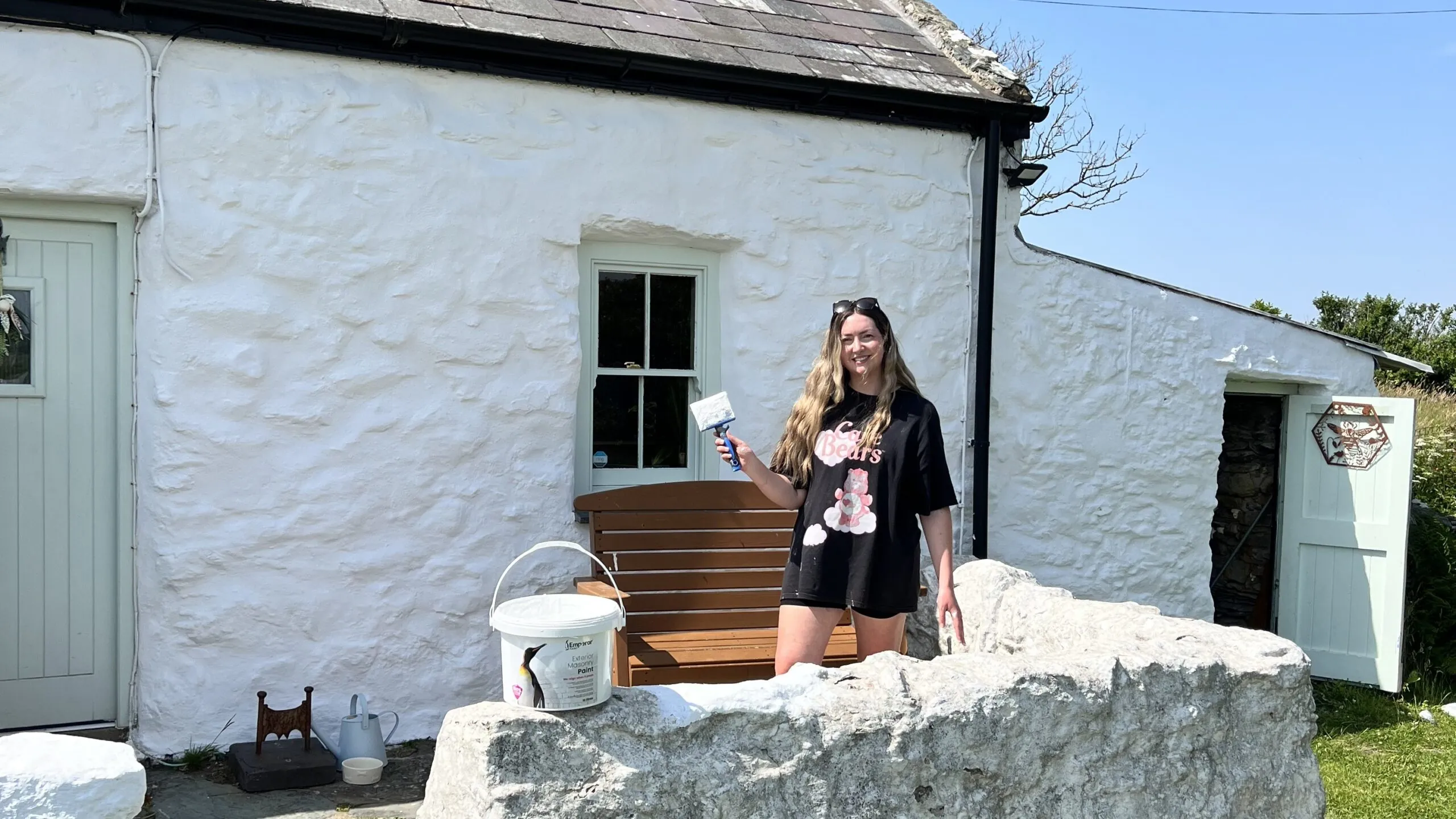
Content reviewed by Emperor Paint technical team – specialists in external coatings with an average of over 25 years experience in the building industry.
Frequently Asked Questions
Do I need to remove all peeling paint before repainting?
Yes, in order to make sure the new paint can form a good bond to the exterior wall, you need to remove any peeling or flaking paint from the surface. Any paint that is sound and well stuck to the wall can be left and painted over.
Why do some paints claim to be breathable but still peel?
Most masonry paints you will find claim to be breathable as this is crucial for a paint in order to prevent moisture building-up in an exterior wall and potentially causing damp.
The problem is, there is no definitive definition of ‘breathable’. Technically speaking, any paint that allows some level of water vapour to pass through it can be called breathable.
In reality, if water vapour is restricted, it can lead to problems like peeling paint, which is why often cheaper masonry paints begin to peel as quickly as 1-3 years in some cases.
Why does masonry paint peel over time?
Masonry paint, like all exterior paint, is much more likely to begin to peel than paint you use inside your home, thanks to the Great British weather.
The vast majority of peeling paint on exterior walls is caused by moisture. When paint is subject to high levels of moisture over a period of time, the pressure it causes leads to paint lifting away from masonry. This allows more water to enter the wall, increasing moisture levels and worsening the situation.
You’ll usually notice this on exterior walls that are exposed to the most rain. In the UK, that’s often the south-west facing walls, as they get the brunt of wind-driven rain.
Aside from moisture, there are some other reasons paint may peel. This can happen if the wall wasn’t prepared properly, there was loose paint underneath or the wrong primer (or no primer) was used. If the wall wasn’t correctly primed, you would generally see more widespread peeling across the full wall, rather than isolated areas of damage.
In some cases, peeling can also happen when a standard paint is applied over an elastomeric coating, which are highly flexible. When the elastomeric coating flexes, the paint applied over the top does not move as much as therefore could crack. This however is relatively rare.
If you’re unsure how to correctly prep walls before painting, we’ve put together a full prep guide.
What does chemically bond mean?
Most masonry paints are film-forming, which means they create a plastic layer across the surface.
Emperor Masonry Paint works differently. Using nano-technology, it forms a chemical bond with the wall, becoming part of the surface rather than sitting on top of it.
This changes how the paint behaves, helping it stay attached to the wall and reducing the risk of peeling over time.
Is it more expensive?
Emperor Masonry Paint is more expensive than other masonry paints, but when you consider the cost of repainting every few years, it often works out more cost-effective over time.
Explore other common problems

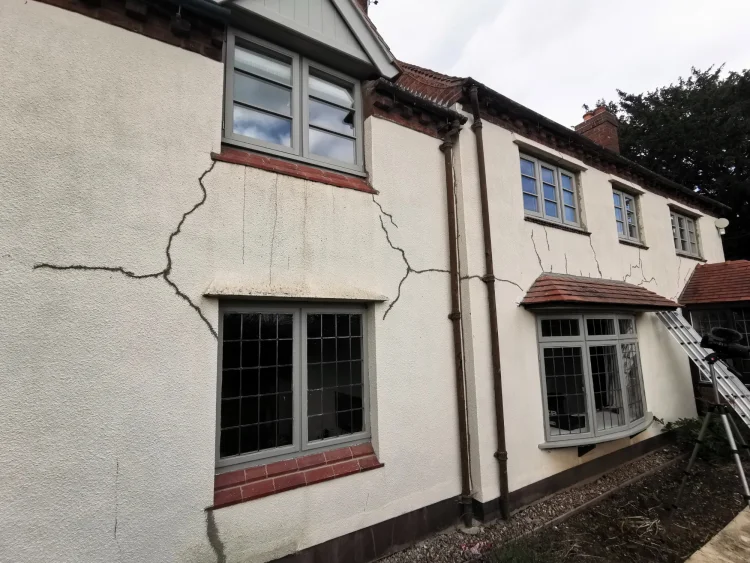
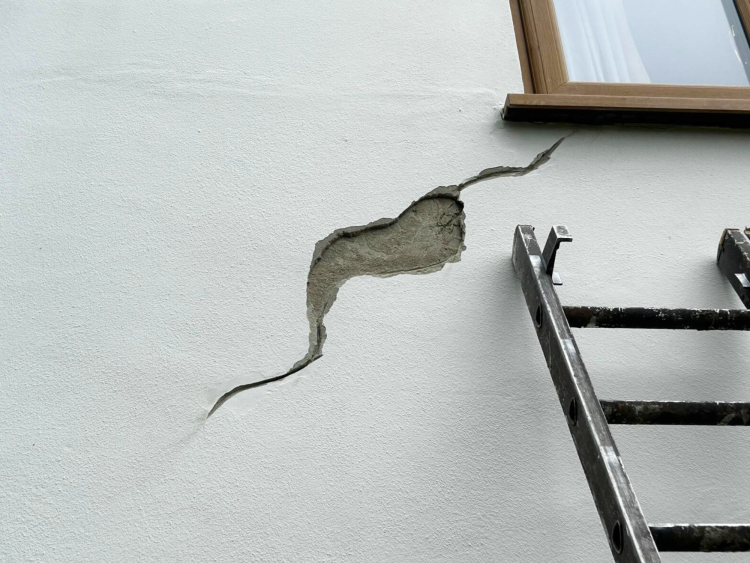
Render repair
Find the best methods to repair damaged render the easy way without having to re-render.

Wet exterior walls
Learn how to stop damp and paint your home so you can say bye to wet walls for good.
Explore all common problems
No two problems are the same. Find the solution to your problem so you can finally say bye to them for good.