
The Problem With Cheap Masonry Paint
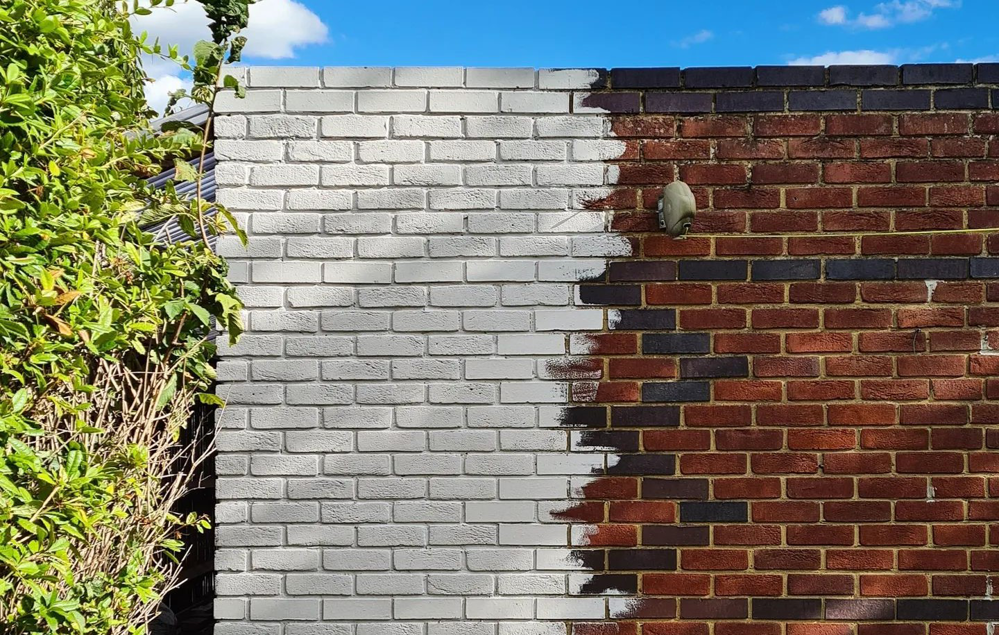
As any professional decorator will tell you, you are only as good as your tools. That is why ensuring you use the best quality products when taking on an exterior decorating project is essential if you want to achieve long-lasting, beautiful results. In the case of masonry paints, this is even more important due to the sheer number of factors that are involved in performance. But what is the difference between masonry paints and what constitutes a ‘cheap masonry paint’?
In this guide we will cover:
- What is masonry paint
- The problem with cheap masonry paint
- What happens if paint is low quality
- The ultimate masonry paint
What Is Masonry Paint?
Masonry paint is a type of paint that is specifically designed for exterior brick, stone, render and other exterior walled surfaces. These are more often than not used on the outside walls of properties, but also on garden walls and retaining walls.
These paints differ from standard emulsions in a number of ways, but mainly due to their weather protection. Especially here in the UK, exterior paints need to endure a wide variety of weather conditions, from wet and freezing winters to high levels of UV in the summer. In order to deal the weather conditions that an exterior paint must withstand, all masonry paints offer some form of weather protection.
Masonry paint is also designed to have higher levels of adhesion in order to withstand any wear and tear that an internal emulsion would not withstand, as well as being suitably formulated to adhere to exterior walled surfaces, including brick, render and stone.
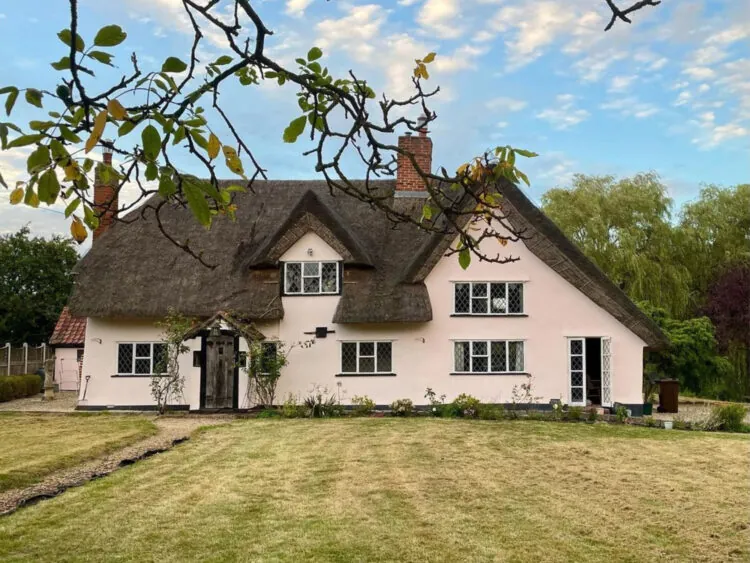
The Problem With Cheap Masonry Paints
There a number of issues that can arise with masonry paints which can not only impact the performance of the paint but also the building it is applied to. Here are some of the common problems that can arise if you use a ‘cheap’ masonry paint that has a lower quality formulation.
1. Lack of weather protection
Terms like water repellent, waterproof, water resistant and weatherproof are often used, but “waterproof” means a surface that almost completely stops moisture from entering. In reality, many masonry paints are not fully waterproof, which is why they are more accurately described as water resistant or weatherproof, even if they are marketed as waterproof.
2. Breathability
Breathability describes how easily water vapour can pass through a surface. Higher breathability keeps walls drier by allowing moisture to escape. Poor breathability traps moisture from inside or outside the building, leading to issues.
Marketing often labels paints as ‘breathable’ even when breathability is low, so the SD value must be checked. An SD value below 0.5 meets British Standards for breathability, with lower values indicating better performance.
Some paints, like limewash, are highly breathable but lack strong weather protection. For exterior walls, both effective weather protection and high breathability are essential to prevent water ingress and moisture build-up.
3. The finish
While moisture protection is key, the final finish also matters. Coverage is often mistaken for opacity. Opacity determines how well a paint hides the surface, while coverage refers to how much paint is needed to achieve the correct film thickness. A paint may have good coverage but poor opacity, requiring multiple coats.
The quality of the finish depends largely on the resins and volume solids. High-quality resins improve durability, weather resistance and UV protection. Volume solids determine how much of the paint remains once solvents evaporate; low volume solids leave a thin, easily weathered film. High volume solids give better long-term performance and a more durable finish.
What Happens If A Paint Is Low Quality?
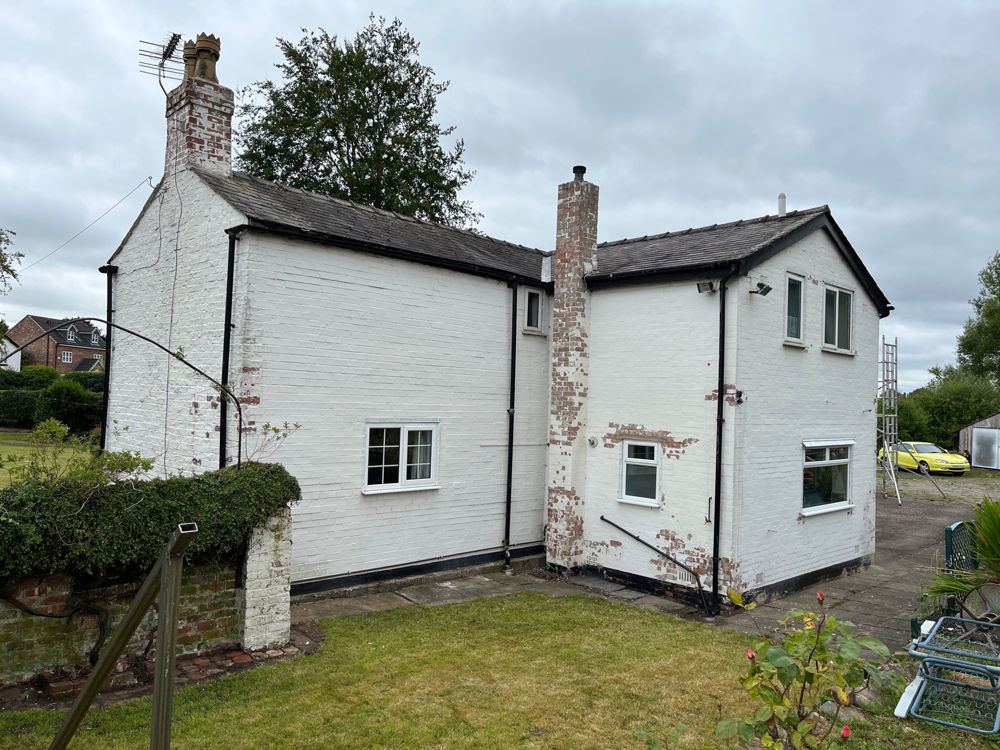
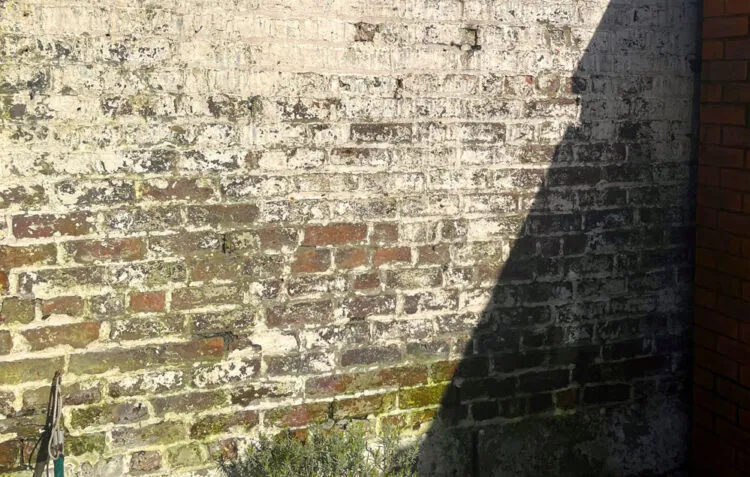
When moisture enters the masonry it can build-up underneath the paint, causing the paint film to come away from the wall. This is more often than not the cause of bubbling, peeling or flaking paint.
The problems moisture causes doesn’t stop there. By causing exterior walls to become saturated, a lack of weather protection can lead to penetrating damp, as moisture from rainfall can soak through the paint, into the external wall and into the internal wall. This is particularly a problem with solid wall properties, but can also impact properties with cavity wall insulation.
Another problem that cheap masonry paint can contribute towards is heat loss. Wet walls transfer heat much quicker than dry ones. By allowing moisture to enter through the paint film and into the exterior wall, heat loss can increase when compared to a property that is painted using a fully waterproof and highly breathable paint.
There is a significant appearance difference between a paint with high weather resistance and one with poor weather resistance. Organic growth such as lichens, mildew and algae all develop in wet, damp conditions. By absorbing moisture, paints with poor weather resistance can result in higher levels of organic growth and discolouration, leading to them needing to be repainting after a few years.
Cheap masonry paint not only leaves a poorer finish but ultimately will not perform long-term due to the cheaper ingredients used in the formulation. Opting for a cheaper paint can save you money in the short-term, however some masonry paints will last as little as 12 months before needing to be repainting, ultimately costing more time and money than simply opting for a slighter more expensive, but higher quality masonry paint.
The Ultimate Masonry Paint
When we developed our innovative formulation, we wanted to revolutionise how masonry paints perform. Having seen how standard masonry paints were not properly protecting houses from the elements, we thought it was time for change.
We had two objectives when we developed our masonry paint. Firstly to produce a paint that significantly reduced water absorption and secondly to ensure the paint did not impact the breathability of exterior walls once applied. The result of this is that we developed our super hydrophobic nano-technology which lines the pores of exterior walls without sealing these pores, preventing water absorption but still maintaining an open-pore structure.
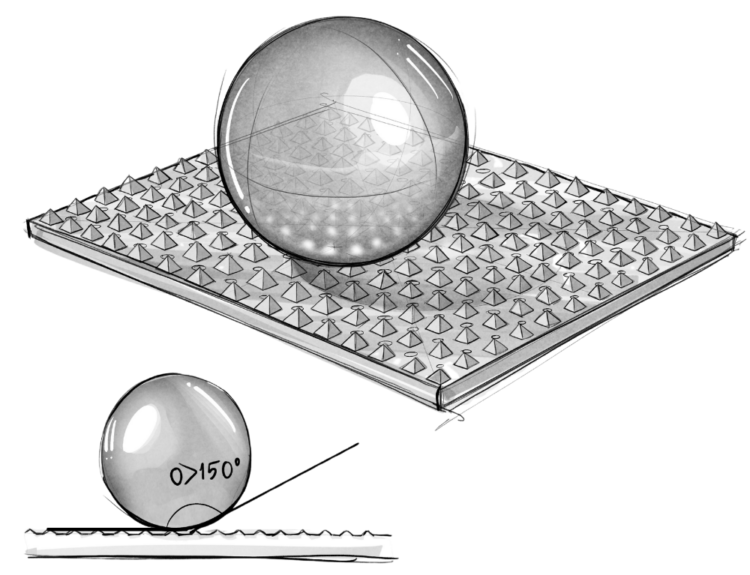
Our nano-technology comprises of millions of microscopic pyramids that mean water beads cannot sit on the surface, causing them to simply roll away. This creates what is known as a ‘super hydrophobic’ surface, as water is completely repelled from it before it can soak through. These pyramids still have small gaps however, that are small enough for water vapour to pass through, ensuring full breathability of the property is maintained.
Discover our paint: Emperor Masonry Paint
When developing our formula, we set out to transform how masonry paints perform. Traditional masonry paints weren’t providing the proper weather protection, so we aimed to create a paint that dramatically reduces water absorption without reducing breathability.
This led us to our super hydrophobic nano-technology, which lines the pores of masonry without sealing them. Millions of microscopic pyramid structures stop water from sitting on the surface, causing it to bead and roll away, while the tiny gaps between them allow water vapour to pass through.
Emperor Masonry paint reduces water absorption by 96% and has an SD value of 0.03, offering full weather protection with breathability similar to limewash. The British Standard for breathability is 0.5, meaning Emperor Masonry Paint far exceeds this. Standard masonry paints often have SD values around 0.6 or higher.
By keeping masonry dry, it prevents penetrating damp, organic growth, discolouration and heat loss. The formulation is UV resistant and will not peel, flake or blister because moisture cannot become trapped beneath the paint. It chemically bonds to the substrate, providing exceptional adhesion.
In independent UKAS-accredited tests, the paint withstood 25 years of harsh weather with no change in appearance or performance. Unlike cheaper paints tested in ideal conditions, our lifespan is based on extreme weathering. Because of this proven durability, we offer a lifetime guarantee.
Emperor Masonry Paint also holds a BBA Agrément Certificate, giving homeowners and professionals confidence in its long-term performance.
Importantly, by preventing water absorption, it also delivers thermal benefits; independent testing shows exterior walls treated with Emperor Masonry Paint stay up to 6°C warmer on average compared to untreated walls.
Find out more: Nano-technology
Frequently Asked Questions
Can using a higher quality paint save me money?
As with everything, value is more important than cost. For example, if a poorer quality cheap masonry paint requires three coats of paint and will last 2 years, this will cost you more in the long run than a high-quality masonry paint that will require two coats of paint and will last 25 years or more. The cost of paint, tools, scaffolding (in some cases) and the time taken in order to repaint the exterior walls will cost much more than doing it properly first time round.
If you have a small exterior wall and you are happy to repaint it annually to give it a refresh, then a cheap masonry paint may be sufficient for you. On larger projects or where both performance and appearance are equally important, paying slightly more initially will save you money and time further down the line.
I want to use a dark colour but Emperor Masonry Paint isn’t available in these colours. What is the best alternative?
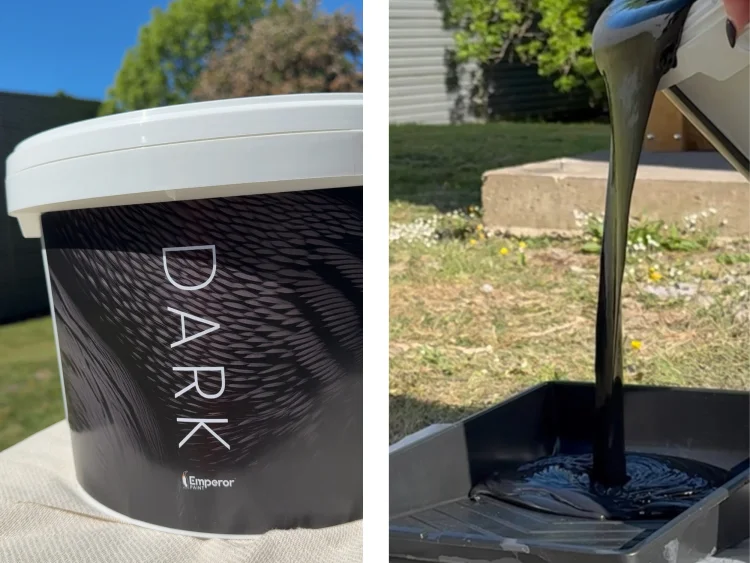
After countless requests from our community to provide a better alternative to the standard masonry paints available we set out to formulate the best possible masonry paint we could in dark colours. The result is Dark by Emperor Paint – a brand-new formulation that offers greater breathability, durability and weather protection than standard masonry paints, while delivering the deep hues of Black and Anthracite Grey.
I have found a cheap masonry paint that says it will last 15 years, is this true?
Unfortunately, like any product paint doesn’t always do what it says on the tin. While a paint may claim to have a certain performance, this could be in ideal conditions which in the UK isn’t very likely. We recommend that when researching a masonry paint to look for independent testing that has been conducted.
I used a standard masonry paint but the coverage as not the one stated, why is this?
The coverage of masonry paint will depend on a couple of factors. Firstly, the texture of the surface will have an impact, with heavy textures such as pebbledash reducing coverage by 50% compared to a smooth surface. The second reason is that some manufacturers can state the recommended coverage for their paint under the best conditions and when applied perfectly. The reality is, this isn’t always achievable with a brush or a roller and by the average homeowner.
Emperor Masonry Paint will achieve a coverage of 5-6m2 per litre, which is an accurate, user-friendly coverage rate that can be achieved by anyone on a smooth or semi-smooth surface. This coverage can be less than lower quality paints, however this allows the paint to create a thicker paint film, which help provide higher levels of durability and water protection.
Have any questions or need some advice on how to carry out a project? Our team of experts are on hand to assist you no matter your problem. You can chat to them by emailing [email protected] or calling 01254 936121.
We know that finding what products you need for your project can feel overwhelming, but we’ve made it easy! Take our project quiz to get personalised recommendations and find the right products for your project in a few clicks.


