
Pebbledash Render – Should You Paint or Re-Render?
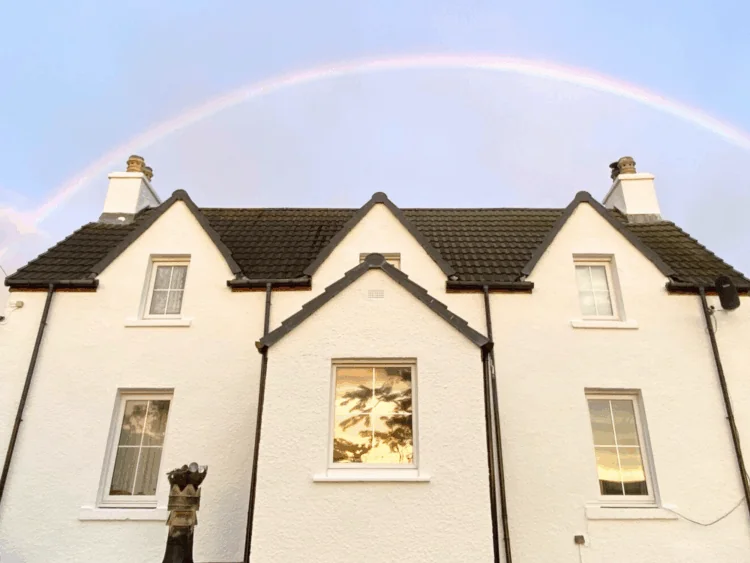
If your pebbledash no longer looks the way you want, you’re not alone. Many homeowners reach a point where it begins looking a tired and patchy. When that happens, the question becomes whether to paint it, remove it or re-render.
The right option for you ultimately depends on your desired results, budget and home.
In this guide we cover:
- How pebbledash performs
- The signs to look out for when making your decision
- The pros and cons of each option
What Is Pebbledash?
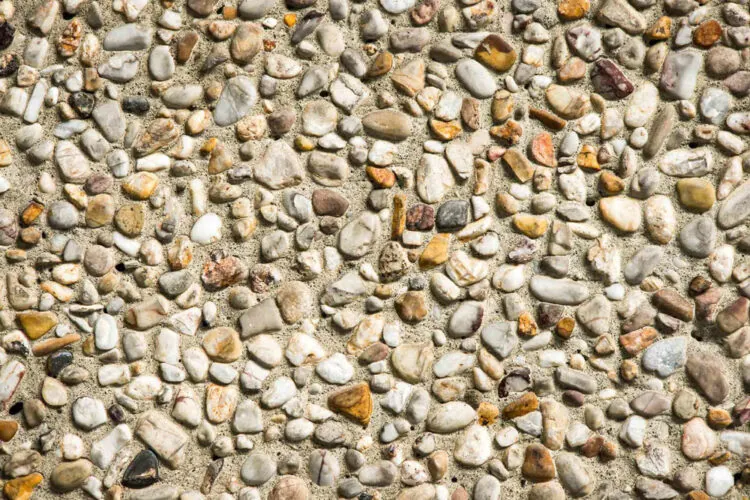
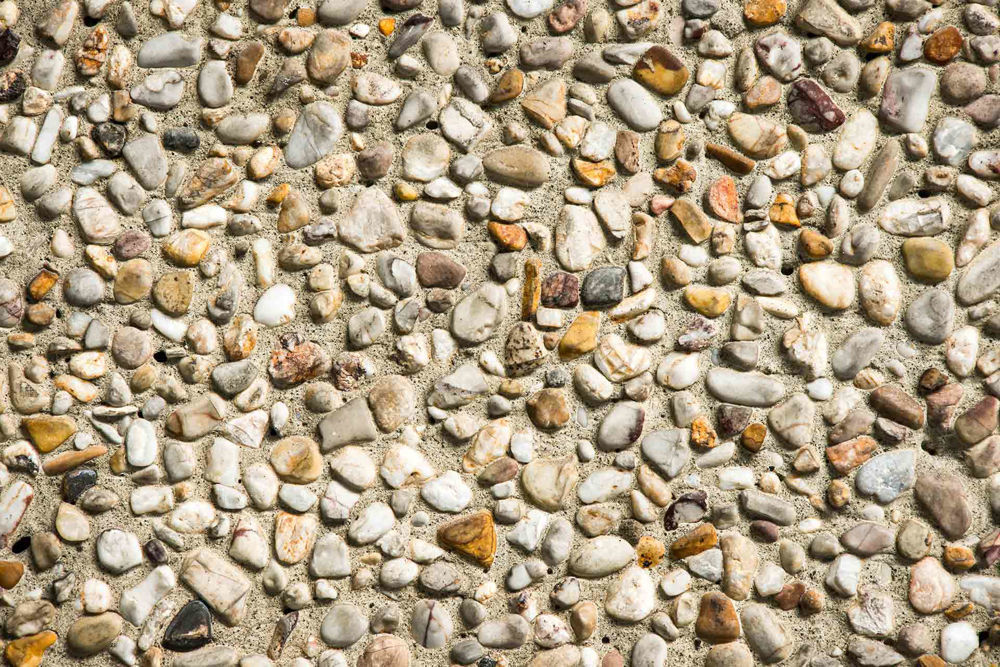
Pebbledash is a form of render that was popularised in the 1920’s, which involves covering an exterior wall with small pebbles and stones.
This can often be confused with a roughcast, which is a similar textured render. While pebbledash is applied by adding a render mix to a masonry wall and throwing the stones on to the wall, a roughcast is applied by mixing the stones into the render and applying this directly to the wall.
Pebbledash is a divisive finish. On the positive side it is cost-effective and has high durability in harsh weather conditions thanks to the density of the render.
On the negative side, a cement-based render like pebbledash can impact the breathability of the wall, meaning water vapour can often be trapped within a property as it can’t naturally escape through the wall.
The rough texture also traps dirt and algae, which builds up over-time. This is often why older pebbledash looks tired and dated even when the render itself is sound.
Signs Your Pebbledash Isn’t Performing
When it comes to the performance of pebbledash, there are a number of issues that can arise in certain cases.
The most common problems with pebbledash include:
- Stones falling out over time, leaving bare areas of exposed render underneath.
- Darkened patches after rainfall, showing moisture is soaking into the render. This is also known as penetrating damp.
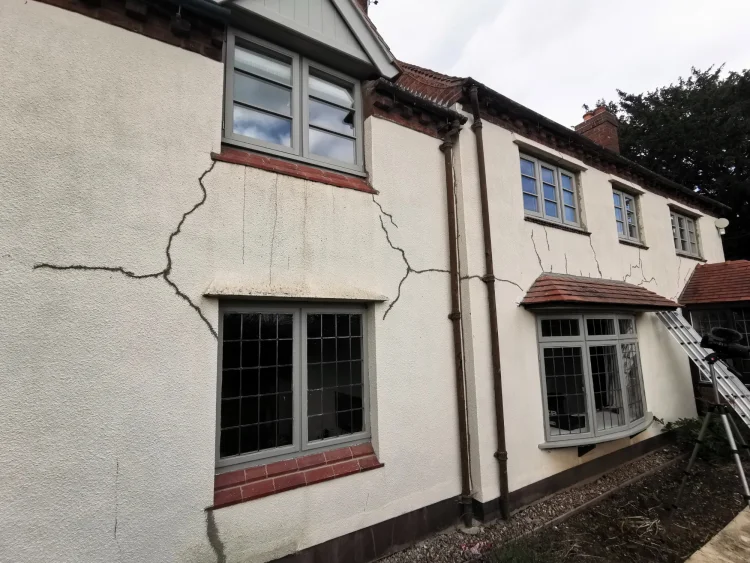
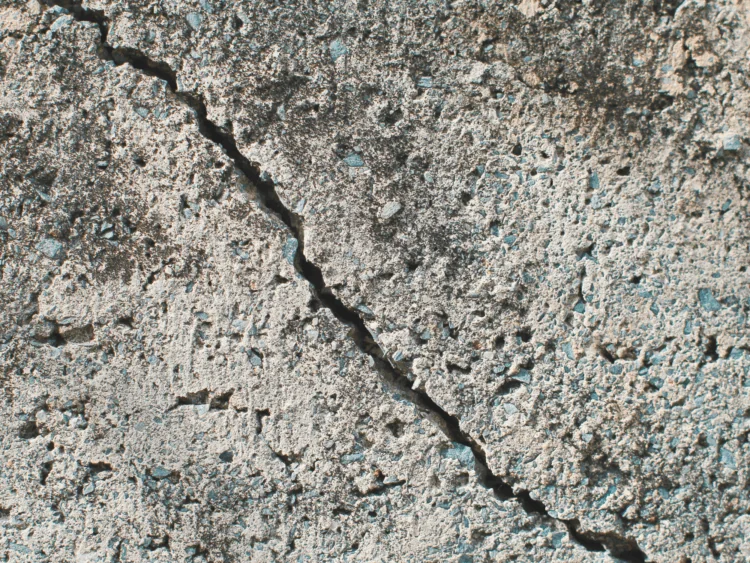
- Cracks in the surface, which can allow more water to enter the render.
- Older pebbledash can become brittle and weaken over time.
- Green growth and discolouration, which shows the render is holding water, which leads to further decay.
If you want to see how healthy your walls are, use our handy wall health check to spot issues early and keep your home stress free.
Should You Remove, Re-Render or Paint Pebbledash?
If it’s time to give your pebbledash some TLC, it’s time to consider whether to remove it, cover it with fresh render or paint it.
The right option for you and your home depends on the results you want and the budget you’re working with. After all, every home and situation is different.
REMOVING PEBBLEDASH
Removing pebbledash is possible, however it can be a long, labour intensive process. Once the render is removed, it can expose some areas of brickwork that have been damaged such as cracks and spalling brickwork that weren’t there when the pebbledash was applied, which must be repaired.
Furthermore, repointing may have to be done to restore the natural brickwork back to its former glory. This means that removing the pebbledash can come with risks, which is why it is generally only recommended if you desire a natural brickwork finish or you’re restoring an older building back to original condition.
The cost of this can vary, with Checkatrade estimating that having pebbledash removed is likely to cost £2,100 to £7,800 depending on the size of the property. This does not include the remedial work or any painting of the property, once the external rendering has been removed.
When removal makes sense:
- You want the original brickwork exposed
- You’re restoring an older property back to original character
- The brickwork is in good condition
- You’re prepared for repair work
When to avoid removal:
- You want a quick and simple solution
- You’re working within a limited budget
- The brickwork beneath could be damaged
RENDERING OVER PEBBLEDASH
If removing the pebbledash isn’t the right choice but you want to achieve a smooth rendered finish, you can render over the top of the existing pebbledash. This covers the texture and gives the property a clean, updated look without taking the original render off.
Rendering over pebbledash only works when the existing surface is solid. Any areas where the pebbledash is damaged or coming away from the wall must be repaired first.
Rendering is a mid-range option in terms of cost and disruption. Prices depend on size, access and the render system used. Checkatrade estimate rendering a property will cost between £2,835-£5,670 for a typical sized house.
When re-rendering makes sense:
- The existing pebbledash is sound
- You want a smooth, modern look
When to avoid re-rendering:
- Large areas need repair before rendering
- The pebbledash is poorly adhered to the wall
- You want to optimise the breathability of the house
PAINTING PEBBLEDASH
The final option for renovating your existing pebbledash is to paint the render, which is the easiest and most common form of renovating pebbledash.
Painting pebbledash keeps the textured finish, but gives it a cleaner, more uniform look. When done with the right paint, it also supports the long-term health of the wall.
Pebbledash is dense and holds moisture for longer than other masonry. This means the performance of the paint matters more than on other surfaces. Standard masonry paints absorb water from rainfall and don’t have high breathability. This means the surface gets wet and holds this moisture, leading to peeling, damp and damage to the wall.
To avoid this, a paint needs the ability to prevent water entering the wall, but still allow moisture to naturally escape.
This is why Emperor Masonry Paint and its cutting-edge nano-technology were developed. It creates a super hydrophobic surface that causes water to form beads that roll off walls, while still remaining highly breathable.
With water being the main cause of paint failure, keeping the surface dry is the most effective way to maintain long-term performance. Independent tests showed no signs of deterioration in appearance or performance after 25 years, which is why it comes with a lifetime guarantee.
Learn more: How Emperor Masonry Paint performs
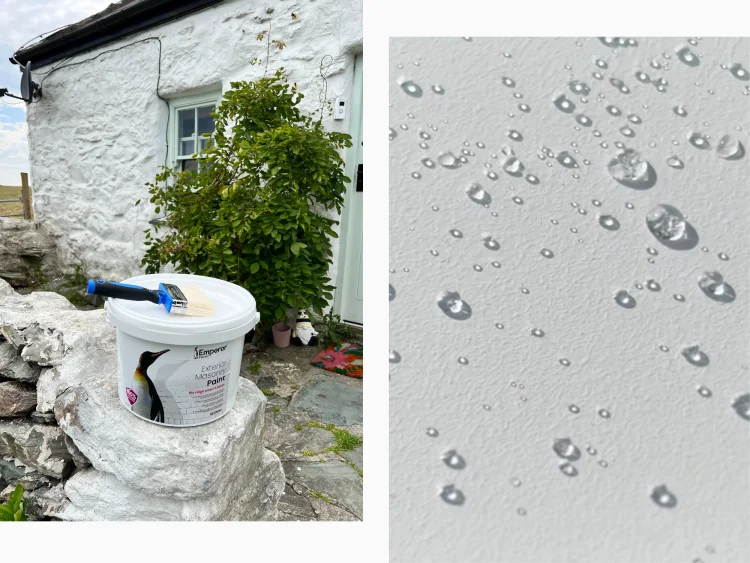
As with any exterior decorating, the pebbledash must be completely sound before you can paint. If there are any cracks or areas where the pebbledash has failed, these must be repaired using either exterior filler.
Painting pebbledash is a cost-effective option, costing between £750-£1250 for the average semi-detached house and is something that can be done yourself, limiting disruption.
When painting makes sense:
- The pebbledash is solid
- You want to improve the performance of the pebbledash
- You want a lower-cost option
- You do not want the disruption caused by removal or re-rendering
When to avoid painting:
- The render is coming away from the wall
- The wall needs structural repairs
- You want a completely smooth rendered finish
Learn more: How to paint pebbledash
Frequently Asked Questions
How do I make pebbledash look better?
By far the most popular colour for painting exterior walls, whether they are pebbledash, roughcast, brick or stone is a bright white.
White is a timeless shade that works equally well on heritage properties as it does on a new build. If you’re looking for a softer look, Off-White has a slightly warmer tone without losing its freshness.
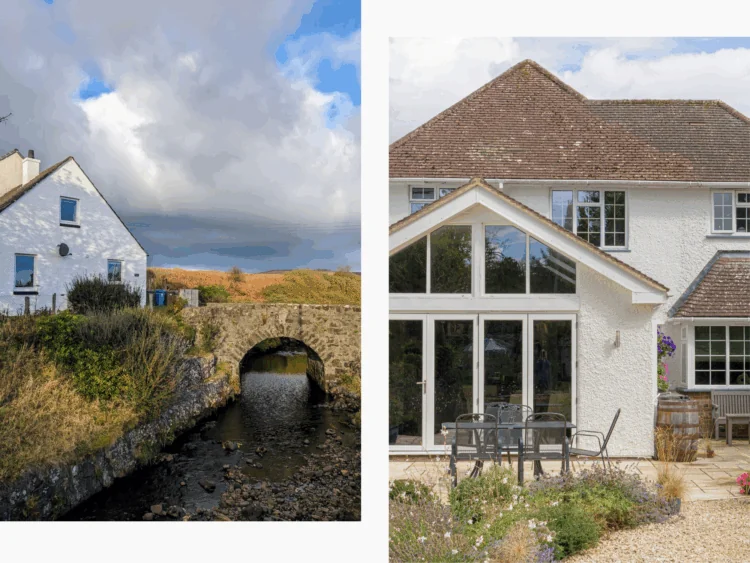
Mark Leah using White (left), Nick Thorn using Off-White (right).
Aside from white, many homeowners choose neutrals like Witney Cream and Magnolia for their ability to keep the exterior bright while giving a softer, more traditional look. These work particularly well on textured finishes, blending more naturally with the character of the home.
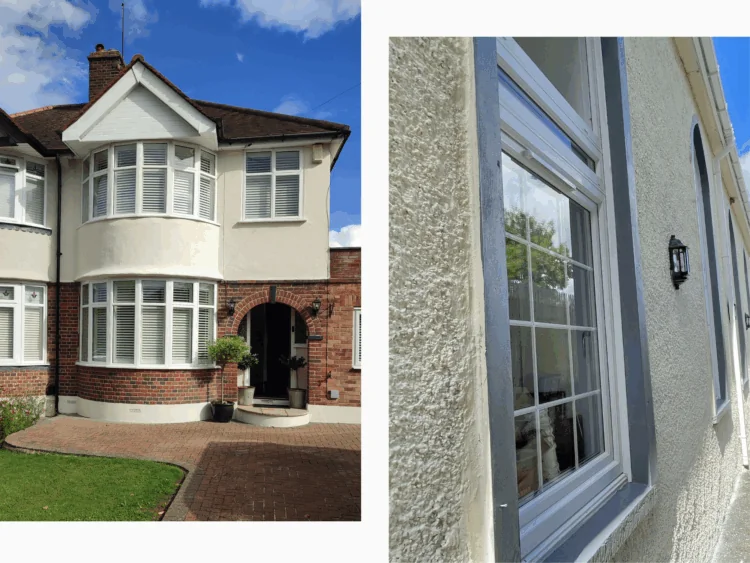
Joe Harper using Magnolia (left), Gordon O’Neill using Witney Cream (right).
How can I check if my pebbledash is sound?
It’s essential to check the condition of pebbledash before choosing to paint it, re-render or remove it.
You can carry out a quick assessment yourself using this step-by-step guide:
- Tap several areas of the wall – a hollow sound means the render is detached from the wall.
- Check for loose stones or patches that are damp.
- Look for cracks on the surface – hairline cracks can be repaired, while larger cracks suggest deeper issues.
Does pebbledash cause damp?
Most pebbledash is cement-based, meaning it has low breathability. Low breathability becomes a problem when moisture builds within the wall quicker than it can escape, leading to damp problems and damage.
Moisture can build up within a wall in two ways; indoor humidity that moves outwards as water vapour, and rainwater that moves inwards as a liquid. Both need a way to escape through the wall in order to keep it dry.
The simplest way to lower the moisture level is to limit how much rainwater enters the wall in the first place. When the wall absorbs less water, the amount of moisture it needs to release is smaller, which reduces the pressure on breathability. The wall still breathes, it just takes longer than if the surface was highly breathable.
You don’t need to remove pebbledash to help manage this. In many cases, reducing water absorption and maintaining breathability is enough to support the long-term health of the wall. The key is to avoid paints and sealers that further restrict breathability, as this is what traps moisture and causes problems.
Learn more: How breathability works
Ready to start your project? Order a sample of Emperor Masonry Paint and start the transformation of your pebbledash render.
Not sure which products you need? Take our handy quiz to get personalised recommendations and find the right products for your project in a few clicks.
This article was written by the Emperor Technical Team, a group of experts with an average of over 25 years experience in the building industry. They work daily with homeowners, tradespeople and specification professionals to deliver practical, expert guidance that promotes long-term results, supports wall health and helps create homes that are prepared for the future.