
Painting A Garden Wall – The Expert Guide
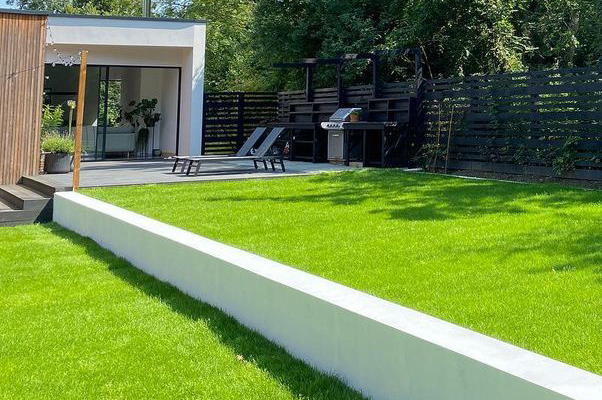
Taking on any DIY project can be a daunting task, but painting garden walls is an easy project that anyone can carry out with a little bit of prep.
Both previously painted walls and exposed brickwork are perfect opportunities to create a brand-new look for your outdoor space, giving it a new lease of life, while also giving it some much needed protection from the elements.
In this guide we will cover:
- The best paint for garden walls
- How to paint garden walls
- How to use colour to complement your space
What’s The Best Paint For Garden Walls?
Choosing the right paint matters more than any other step in your project.
Not all paint is suitable for use on exterior surfaces due to the conditions that the paint must endure.
Masonry paint is designed specifically for exterior surfaces, such as brick, stone, concrete and render. It adheres to rough materials as well as being designed to resist the high levels of moisture that exterior walls are exposed to.
As with all paints, masonry paint can vary in characteristics and quality. Some masonry paints are developed to solve small exterior DIY projects cheaply and will last 1-3 years, while some are designed to provide long-term protection over 25+ years.
The importance of the quality and durability it provides is significantly increased when it comes to any exterior paint due to the high number of external factors that can impact the performance of the paint.
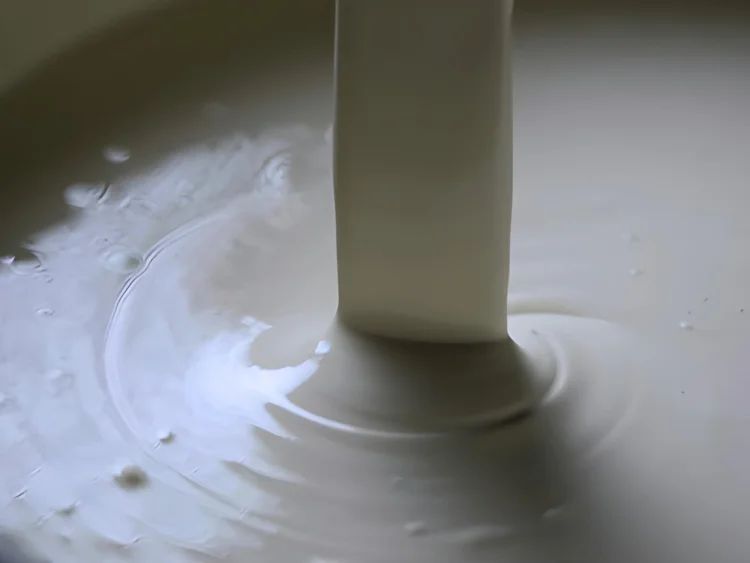
While most masonry paints refer to themselves as ‘weatherproof’ this does not mean they prevent water from being absorbed. To do this, a masonry paint must be able to repel water.
The surface must also stay breathable, allowing moisture vapour from inside the wall to escape. Without high breathability, trapped moisture builds up and causes the paint to peel and blister.
When comparing masonry paints, look for two key features:
- Water repellence – The ability for the paint to prevent water absorbing into the surface.
- Breathability – How easily water vapour can pass through. This is measured with an SD value – The lower the number, the better the breathability.
Both factors are especially important for garden walls, which are constantly exposed to rain, frost and moisture.
Unlike the outside of your house, garden walls often don’t have internal waterproofing, so moisture can move freely in and out of the structure. This two-way movement makes it important to use a paint that repels rainwater while allowing water vapour to escape, keeping the wall dry and preventing damage over time.
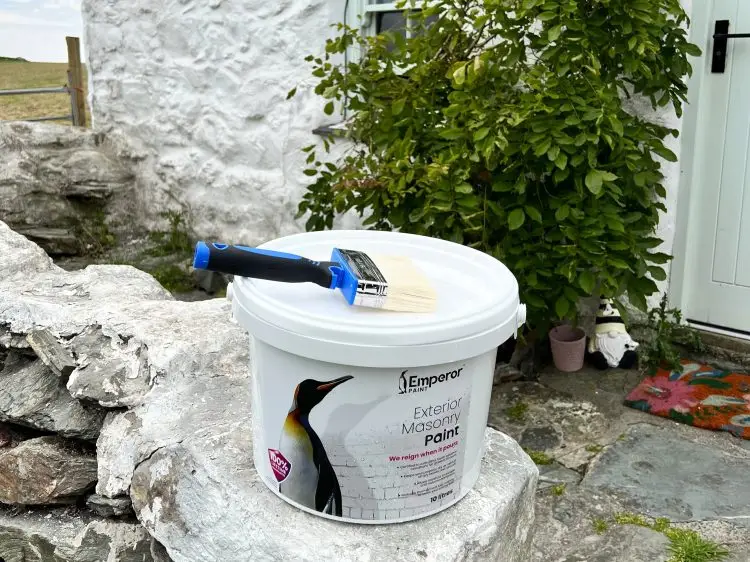
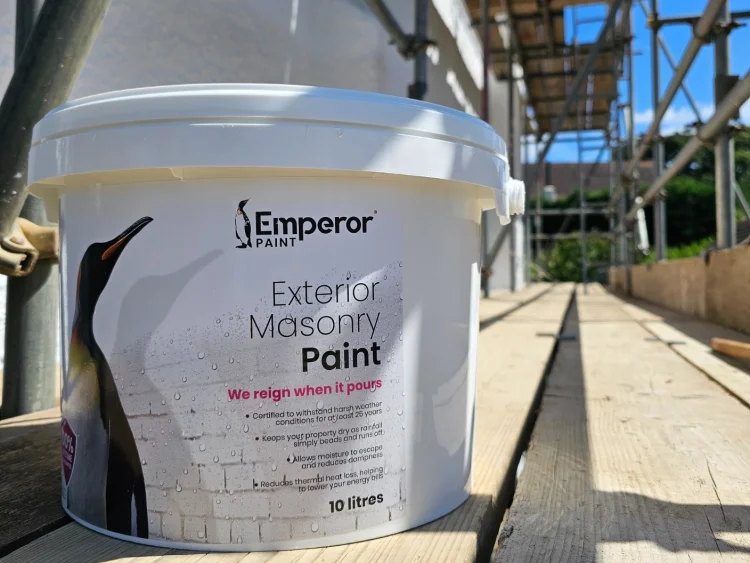
For garden walls a paint like Emperor Masonry Paint is ideal. Independent testing showed it reduced water absorption by up to 96%, while remaining highly breathable with an SD value of 0.03. This is thanks to using unique nano-technology that allows it to perform differently to standard masonry paints.
Learn more: How nano-technology works
How To Paint A Garden Wall
When you have your masonry paint ready, it’s time to get painting.
Top tip: Check the weather before you start. Paint can take 1-2 hours to be touch dry, so you need to make sure there aren’t any showers coming that can wash away your work.
YOU WILL NEED:
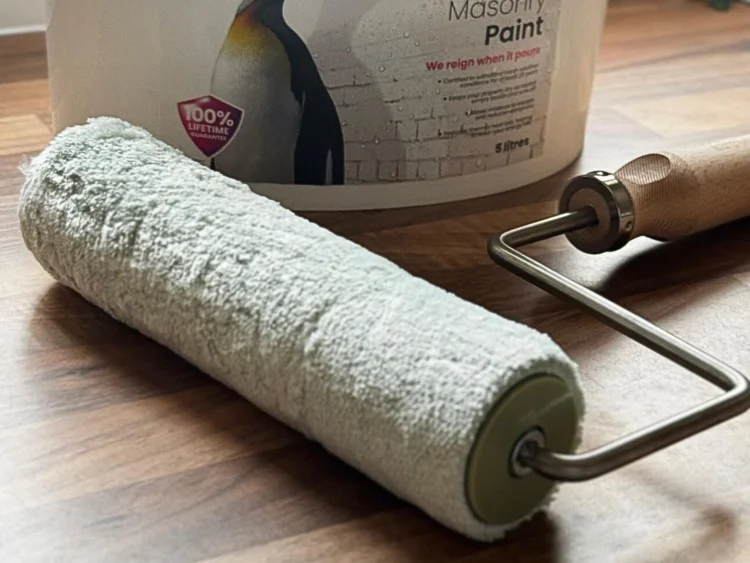
- Masonry roller (long-pile roller)
- Paint tray or scuttle
- Synthetic paint brush
- Dust sheet
- Masking tape
- Masonry paint
- Exterior filler and filling knife (may be required)
- Scraper (may be required)
- 120 grit sandpaper (may be required)
PREPARATION
Preparation is one of the most important parts of the decorating process, which is why it’s important that you take time at this stage as it will pay dividends with the finished results.
- Make sure the wall is solid and free from damage
- If there are any cracks or holes make sure to fill these using a good-quality exterior filler
- Wash the wall down with a garden hose to remove any dirt and grime from the surface.
- Apply a fungicidal masonry cleaner such as Emperor Masonry Cleaner to the garden wall using a brush or roller
- Cover any surfaces that you do not want to paint with a dustsheet and apply masking tape along any edges of the wall
PRIMING
If you are painting a garden wall that has never been painted before, you must prime it.
If you are simply refreshing painted masonry, this step is usually not required.
Skipping primer on bare surfaces will not only reduce the coverage of the paint you are using but may also mean the paint doesn’t form a solid bond to the garden wall.
- Make sure the surface is dry to the touch with no visible moisture
- Apply one coat of primer using a brush or long-pile roller
- Allow to dry – this needs to be for the full recoat time, not to be confused with the drying time
PAINTING
Once your garden wall is prepared and primed, you can begin painting.
We recommend starting at the top of the wall and working your way down, as this will allow you to go over any paint drips as you go.
- Start with a paint brush at the edges, applying your first coat of paint
- Use your long-pile paint roller to paint the rest of the surface
- Allow your first coat to dry – this often takes up to 8 hours
- Once dry, apply the second coat to the wall, ensuring you achieve your desired finish as this will be your final coat of paint.
If you are using a good-quality masonry paint, you will only require two coats, however if you are using a paint that has not achieved your desired finish, apply a third.

Ways To Transform Your Garden Walls
There is a world of options when it comes to painting a garden wall, and when chosen well, the right colour can completely change the feel of your outdoor space.
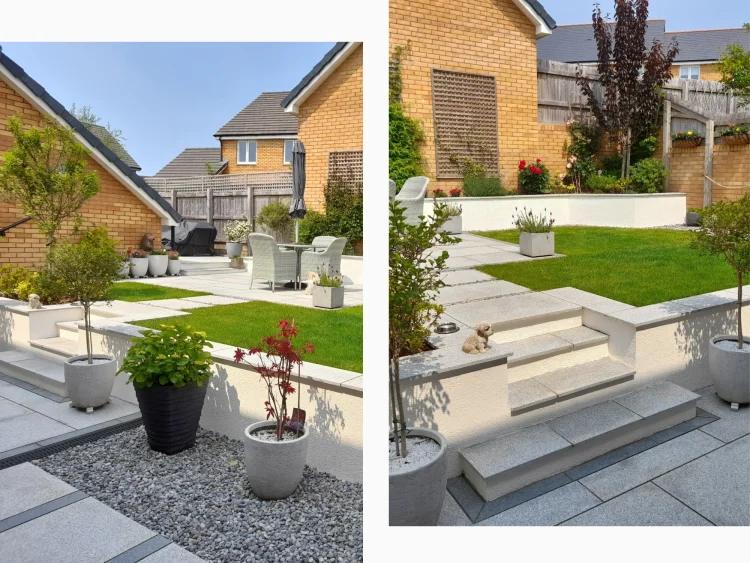
By far the most popular colour for garden walls is white, which can give a clean, crisp and extremely modern look, especially when used in a contemporary garden.
We loved what @happyharrishousebuild did with their garden creating an ultra-modern outdoor space using white rendered walls to encompass their garden.
Top tip: White shades can discolour over time, especially outdoors. Using a self-cleaning masonry paint like Emperor Masonry Paint, you can enjoy white in all its glory for years to come.
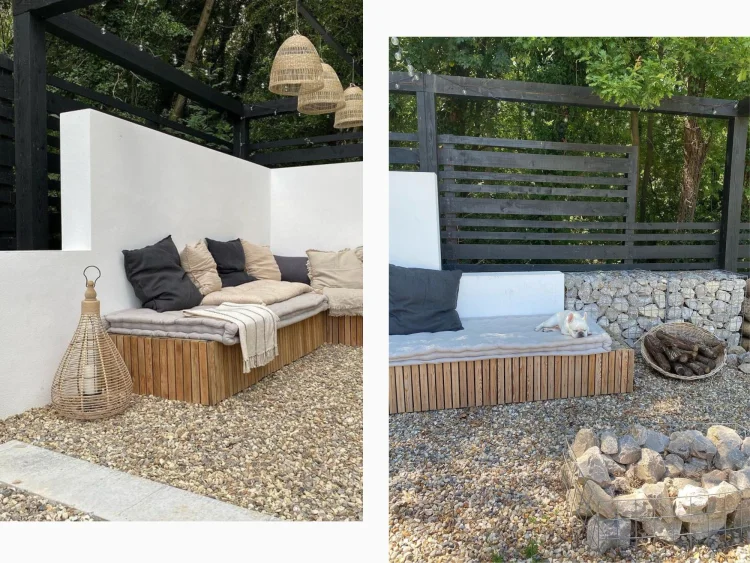
For a softer take on white, Warm White offers the same clean look with a less stark finish. Particularly in gardens that don’t get much direct sunlight, such as north-facing gardens and courtyards, pure whites can look flat or cold.
In Vic’s garden, the shade brings light without feeling harsh, while the warm undertones soften the brick and complement the surrounding greenery.
If you are looking for a more complex colour, neutral tones can help create a defined style while keeping a relaxed feel.
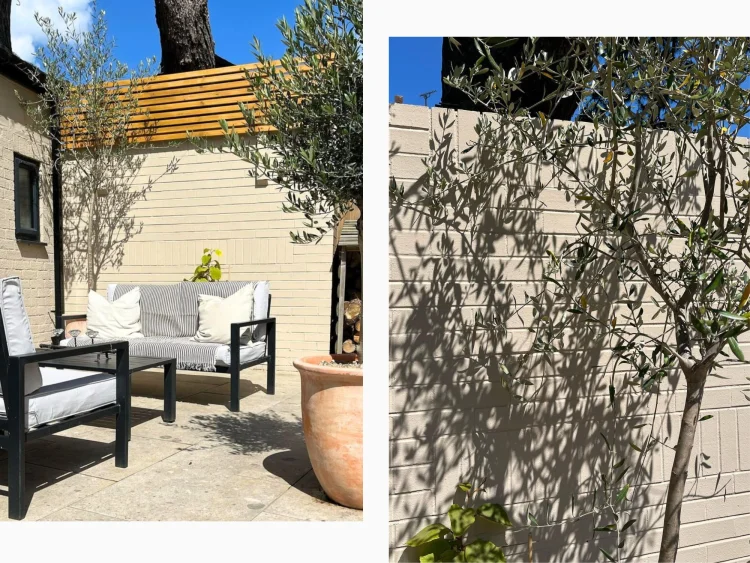
Brown Sugar is a Mediterranean-inspired shade that @deb_at_no27 paired beautifully with olive trees and soft neutral decor to create a warm, cosy corner in her outdoor space.
Want to find the perfect colour for your garden wall? Explore our standard colour range.
Frequently Asked Questions
CAN YOU PAINT A RETAINING GARDEN WALL?
Yes, a retaining garden wall can be painted, providing it has adequate waterproofing measures put on the inside of the wall to prevent moisture from the soil leaking through the wall.
If a waterproofing membrane is present on the back of your retaining wall, using a highly breathable masonry paint will allow water vapour to escape from inside the retaining wall, helping maintain moisture levels.
If a low breathability paint was used, this moisture could build up and eventually cause the paint to fail.
HOW DO I PREVENT REPAIRS BEING VISIBLE ONCE I PAINT?
Garden walls, especially those that have been rendered, can suffer from cracks, holes and other imperfections that need to be repaired when you paint them.
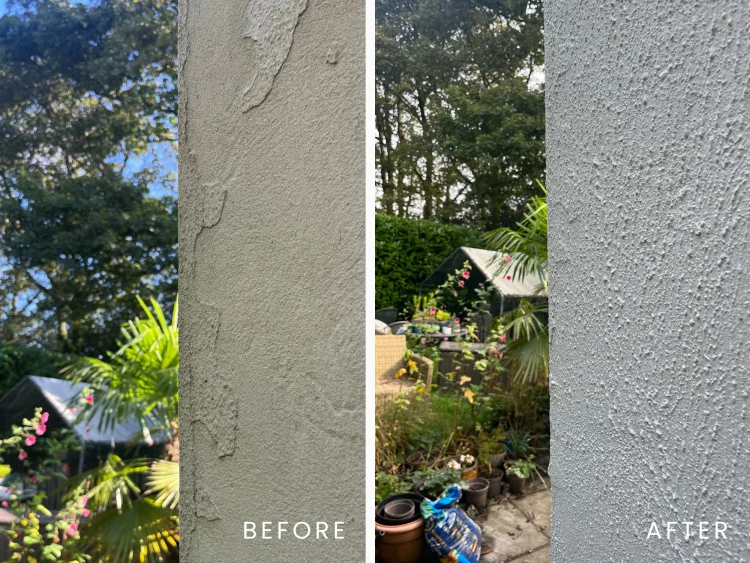
The problem is, these repairs are difficult to mask once completed, causing them to draw attention. If you have a textured finish or want to create a textured finish on your garden walls Emperor Textured Basecoat is ideal.
It allows a number of textured finishes to be created using various textured rollers, from light texture to rough texture. This is perfect for masking repairs and matching up various textures to create a seamless finish.
CAN YOU PAINT DAMP GARDEN WALLS?
Garden walls must be completely dry before painting, especially with a water-based paint like the vast majority of masonry paints are.
You should not paint a damp garden wall until you have resolved the issue that is causing the water ingress.
By using a paint that is designed to prevent this moisture, the damp patches should not reappear.
Always wait until the temperatures rise and the wall has had a chance to dry out before you start painting.
How Much Paint Do I Need?
There are three things you must consider when estimating the amount of paint you will need are; the size of the wall, the coverage of the paint and the number of coats you will need.
To estimate the size of the area you will be painting simply measure the length of the wall and the height of the wall in metres. When you multiply these numbers together, you will get the total square metres of the wall. The coverage of masonry paint varies from paint to paint, with Emperor Masonry Paint for example having a coverage 5-6m² per litre on smooth surfaces.
On rough exterior walls such as pebbledash, the coverage of the paint could be half of what it is on a smooth masonry surface.
Finally, all you have to do is check how many coats of paint you will need, which with a good-quality masonry paint will almost always be two coats, while cheaper masonry paints may take three coats.
If you have more questions about painting your garden walls, our in-house team of experts are always here should you need us. You can reach them by emailing [email protected] or calling 01254 936121.
Ready to start? Take our handy quiz to get personalised recommendations and find the right products to paint lime render in a few clicks.
This article was written by the Emperor Technical Team, a group of experts with an average of over 25 years experience in the building industry. They work daily with homeowners, tradespeople and specification professionals to deliver practical, expert guidance that promotes long-term results, supports wall health and helps create homes that are prepared for the future.