

What Is Breathable Masonry Paint?
If you plan to paint exterior walls, you will see the term ‘breathable masonry paint’ quite a lot, but what does it actually mean and why does it matter for your home?
This guide explains:
- What breathability is and how it works
- Why low breathability masonry paints can cause problems
- How breathable masonry paint is measured
- How advanced masonry paints combine breathability with weather protection
 Key takeaways
 Key takeaways
- Breathable masonry paint allows moisture to escape naturally from exterior walls.
- Many standard masonry paints trap moisture by blocking the pores of the wall, which can lead to damp, peeling paint and damaged to your home.
- The best way to compare breathability is by checking the SD value of a paint, with lower values allowing moisture to escape more freely.
- Paints like Emperor Masonry Paint combine strong weather protection with an SD value of 0.03, helping keep walls dry while still allowing them to breathe naturally.
What Is Breathability In Masonry Paint?
Breathability describes how easily water vapour can pass through a building material.
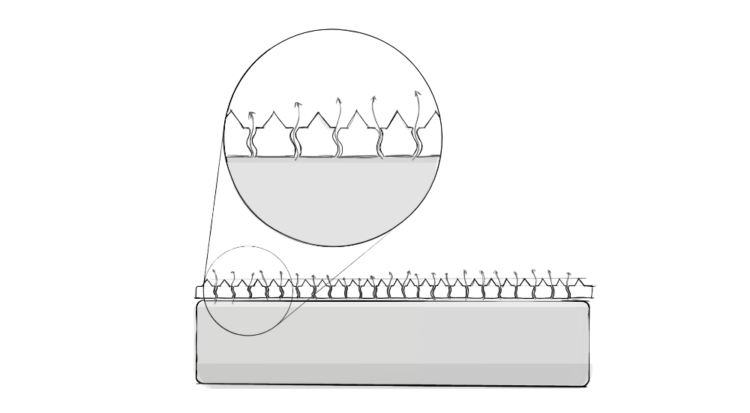
Materials like brick, stone and render contain microscopic pathways, otherwise known as pores, that allow air and vapour to move freely through them and ensure moisture is regulated.
Why Breathability is Critical For Your Home
Walls are constantly exposed to moisture, whether rain from the outside or condensation from the inside.
During heavy rain, exterior walls soak up water which makes its way through the pores in a process called capillary action.
Eventually, the same pores that drew in the water allow it to evaporate back out.
At the same time, moisture that gathers within the home from everyday activities like cooking and drying needs to escape. If a wall’s natural breathability is maintained, this vapour can pass through and disperse without building up.
As long as this moisture isn’t blocked, breathability is maintained and your home stays dry and structurally sound.
The Problem With Standard Masonry Paint
Many standard masonry paints, renders and sealers that are often used are impacting the natural breathability of houses across the UK.
Instead of supporting the way exterior walls release moisture, they can limit breathability by blocking the pores.
This problem is then compounded by the nature of the UK’s housing stock and climate. With ageing homes that are increasingly vulnerable to water ingress, walls are already under pressure. Combine that with higher levels of indoor condensation and heavier, more frequent rainfall, and the lower breathability caused by these products only makes the situation worse.
The most common masonry paint is acrylic-based. While often described as ‘weatherproof’ or ‘weather resistant’, these formulations can absorb moisture over time as they are not water repellent.
The problem comes with the limited breathability of many acrylic-based masonry paints. Once moisture enters the wall through rainfall or condensation, it cannot escape through the coating quickly enough and becomes trapped.
Issues caused by trapped moisture
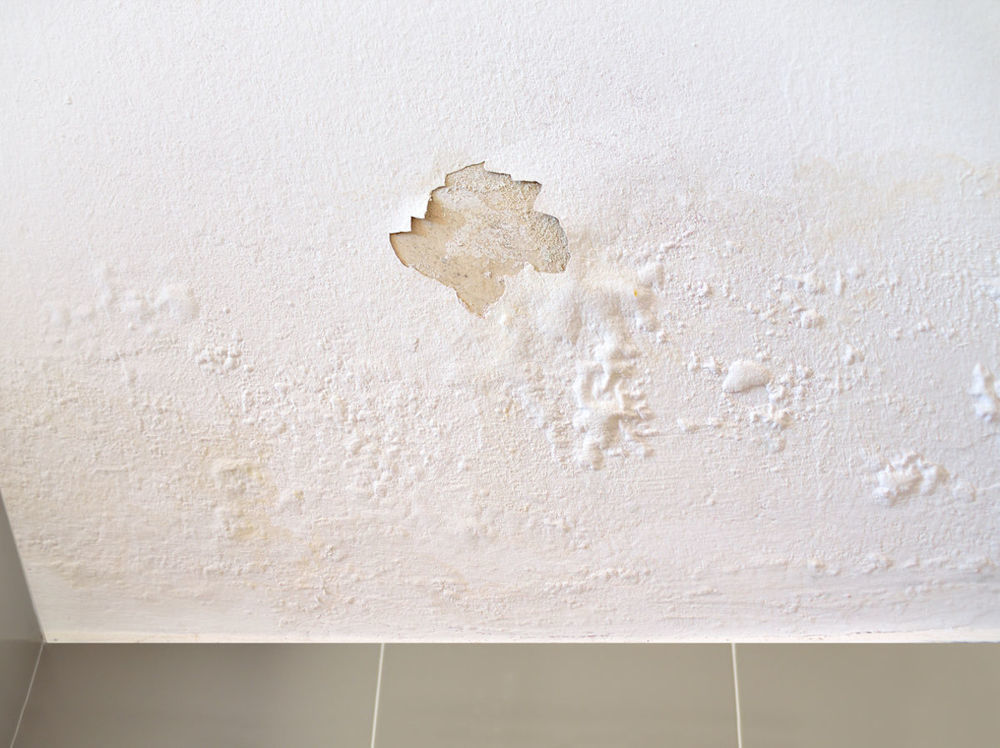
When moisture begins to build-up within a wall underneath the paint film, it creates several issues:
- Damp patches inside the home
- Damage to exterior walls like cracks and spalling bricks from frost damage
- Peeling and bubbling paint both on interior and exterior walls
- Higher energy bills – wet walls lose heat much faster than dry ones, meaning more energy is needed
- Structural issues – prolonged moisture weakens mortar, render and brickwork
Learn more: A guide to water ingress
This means low breathability masonry paints aren’t ideal for the health of any building, but especially older buildings.
These were built with solid walls which are designed to naturally breathe and their ageing materials are more vulnerable to trapped moisture.
In older buildings, blocked breathability can lead to significant deterioration in building integrity and in some cases permanent damage.
How Can You Tell If Paint Is Breathable?
The problem with finding a breathable masonry paint is that technically speaking any paint that allows water vapour to pass through it can be called breathable.
The good news is that the breathability of paints and other materials can be measured.
This is done using what’s called an SD value. The SD value shows how resistant a material is to water vapour – the lower the number, the more breathable it is.
To be considered breathable by British Standards a masonry paint should have an SD value of 0.5. In practice though, masonry paints should have an SD value below 0.1 to be considered highly breathable. Independent testing under the BS EN ISO 7783:2018 quality standard is one widely recognised method to confirm these values.
Learn more: How breathability is tested
Which Masonry Paints Are Breathable?
Generally speaking, there are four main types of masonry paint:
- Acrylic masonry paint – the most common form that is cheaper and widely available. These formulations have some breathability and weather resistance, but can vary widely.
- Oil-based masonry paint – an older type of formulation that has strong weather resistance but poor breathability.
- Mineral based paint like limewash – highly breathable, but not designed to keep rain out. Limewash can also wash away in as little as 6 months so usually needs regular reapplication.
- Silicone masonry paint – combines high breathability with water repellency giving them the best of both worlds, but are generally more expensive.
While most masonry paint refers to breathability or microporous properties to some extent, the two forms of masonry paint that are designed to be highly breathable are limewash (along with other forms of mineral paint like silicate masonry paint) and silicone masonry paint.
| Acrylic Masonry Paint | Silicone Masonry Paint | Oil-Based Masonry Paint | Limewash | |
|---|---|---|---|---|
| Breathability | Moderate | Very high | Low | Very high |
| Weather Resistance | Moderate | Very high | High | Low |
| Durability | 1-10 years on average | 25 years+ in some cases | 5-10 years on average | 6-18 months on average |
| Best For | General use, budget friendly | Long-term protection | Specialist use, winter application | Eco-friendly option |
| Main Drawback | Quality varies | Higher upfront cost | Traps moisture due to poor breathability which can lead to damp | Washes away, often annually |
How Can Masonry Paint Do Both?
Why Standard Masonry Paints Fail
Traditional sealers and standard masonry paints reduce breathability because they create a plastic film on the surface. This film blocks the pores of the wall, trapping moisture and leading to damp, peeling paint and damage.
Silicone Masonry Paint
Silicone masonry paint changed this. Instead of sealing the surface, it bonds to the wall to leave the pores open.
- This creates a surface where rain (as a liquid) hits the wall and is repelled
- Water vapour molecules (as a gas) are small enough to pass through the pores and naturally breathe
This is why silicone masonry paint provides both high breathability and high weather protection, something other formulations cannot do.
By keeping your walls dry inside and out, this helps:
- Reduce penetrating damp
- Prevent damp patches and mould on both exterior and interior walls
- Reduces heat loss as damp surfaces lose up to 50% of their insulation value when moisture content reaches just 5%
- Prevents paint peeling – with no moisture, there is nothing to cause paint to lift away from the wall
The Invention Of Nano-Technology
Like all paints, silicone formulations vary. While silicone-based formulations were a breakthrough in masonry paint technology by combining breathability and weather protection, but the latest development builds on a silicone formulation don’t but advancing it with cutting-edge nano-technology.
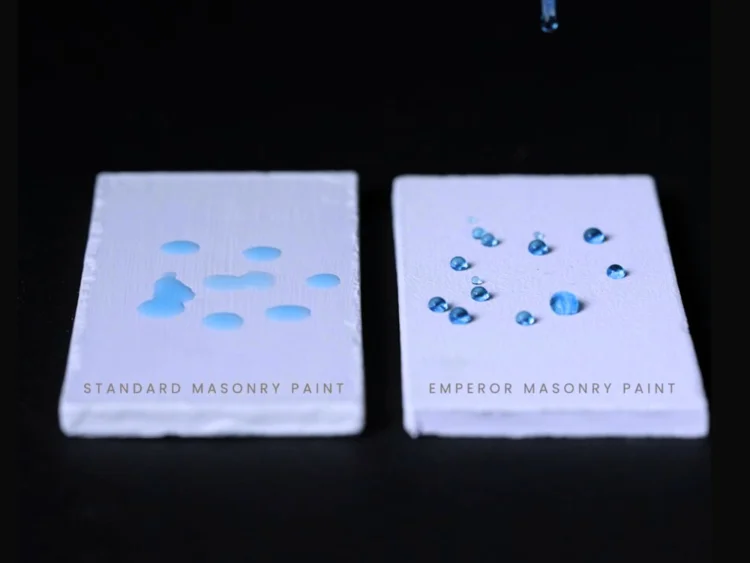
By applying nano-technology to a silicone-based masonry paint, we developed Emperor Masonry Paint. This creates what is known as a super hydrophobic surface.
In short, when water from rain hits in, it is completely repelled and simply rolls away before it can soak into the wall. At the same time, the pores of the wall are left completely open for complete breathability.
Independent tests have shown this to:
- Reduce water absorption by up to 96%
- Remain highly breathable, with an SD value of 0.03 (on par with limewash)
- Keeps walls up to 6°C warmer on average compared to untreated walls
- Withstand harsh weathering for 25 years without peeling or flaking
In fact, after 25 years of accelerated weathering testing, there were no signs of deterioration or loss of performance. That’s why we confidently back Emperor Masonry Paint with a lifetime guarantee.
Learn more: Our independent testing results
Frequently Asked Questions
Should you use a breathable masonry paint on older houses?
Breathability is crucial for properties of any age, whether a listed building or a new-build house. The reason why breathability is mentioned as particularly important for use on older properties is that these structures generally have more moisture present within the masonry.
Furthermore, the ageing nature of the building materials means that if a non-breathable masonry paint is used, the damage that can be caused from the build-up of moisture could be more significant.
In any case, if you want long-term durability and to help prevent damage to exterior walls, you must use a breathable masonry paint.
What surfaces can a breathable masonry paint be applied to?
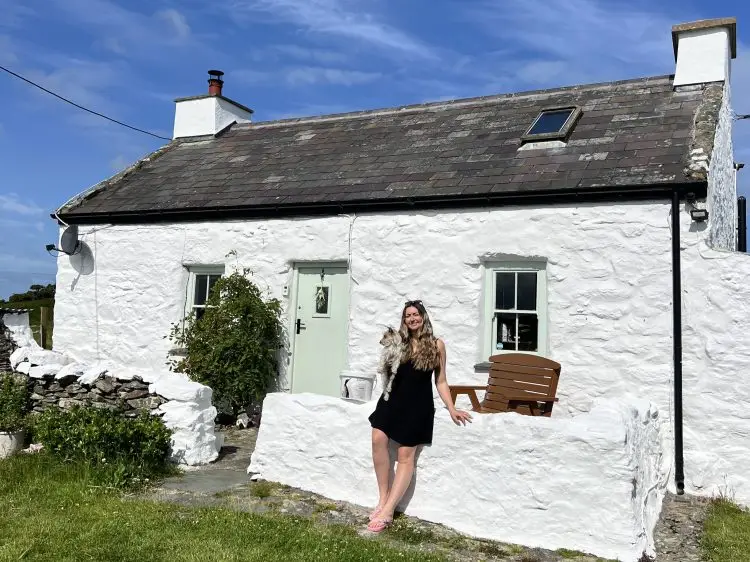
A breathable paint like Emperor Masonry Paint can be applied to most exterior walls, whether brick, stone or concrete.
On bare masonry it is always recommended to apply a primer first which creates a stable base for your paint to stick to. On previously painted walls, the new paint can go directly onto the surface providing it is clean and sound.
Can breathable masonry paint stop damp?
The short answer is yes, using a breathable masonry paint can help prevent damp caused by trapped moisture.
It isn’t however a cure for all types of damp – issues like rising damp, leaking gutters or structural cracks need to be addressed first.
Learn more: What is penetrating damp?
What is the difference between silicate masonry paint and silicone masonry paint?
Silicate masonry paint and silicone masonry paint are two forms of highly breathable masonry paint. Silicate formulations contain inorganic binders become part of the surface itself, while silicone formulations contain organic materials chemically bond. In short, they both achieve high breathability but through different mechanisms.
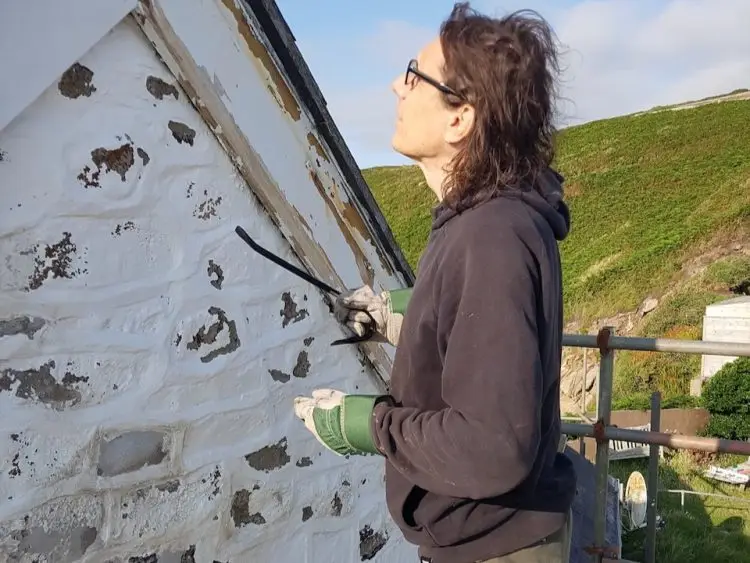
Choosing the right masonry paint is more than just colour, it’s about using a paint that works with your home, not against it.
If you’re planning a project, make sure you check the SD value of your chosen paint and avoid plastic-based paints that can cause you headaches further down the line.
Ready to get started? Take our handy quiz to get personalised recommendations and find the right products for your home, or order a sample of Emperor Masonry Paint to kick-start your project.
This article was written by the Emperor Technical Team, a group of experts with an average of over 25 years experience in the building industry. They work daily with homeowners, tradespeople and specification professionals to deliver practical, expert guidance that promotes long-term results, supports wall health and helps create homes that are prepared for the future.


