

How To Reduce Heat Loss In A House

With energy prices rising, it is now as important as ever to ensure that the amount of heat loss in our homes in minimised as much as possible, meaning less energy is required in order to keep our homes warm.
In this guide we will cover:
- Where is heat lost in the house?
- How is heat lost through the roof?
- How is heat lost through the floor?
- How is heat lost through the windows?
- How is heat lost through draughts?
- How is heat lost through walls?
Where Is Heat Lost In A House?
In December 2020, it was estimated that 14.3 million properties had cavity wall insulation, 16.6 million had loft insulation and just 772,000 had solid wall insulation . This data shows that there are roughly 7.7 million uninsulated houses within the UK without adequate insulating measures in order to reduce heat loss.
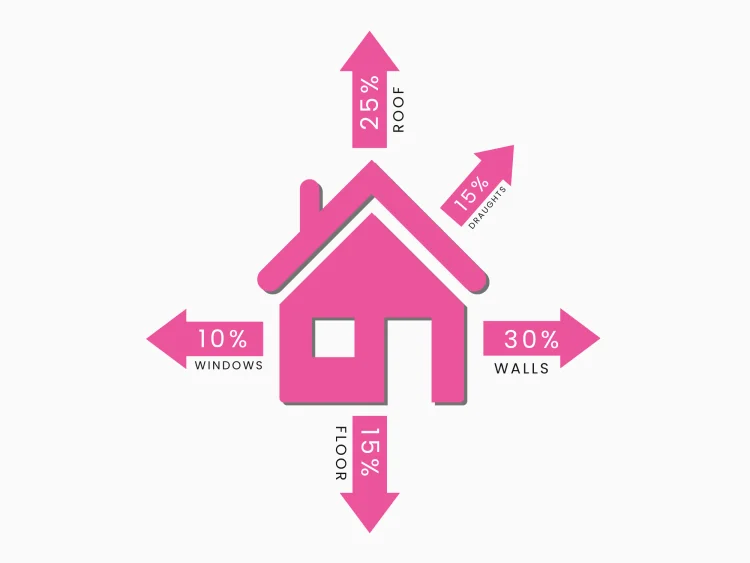
Heat will find any way to travel through a surface, which is why making a property highly energy efficient can be a difficult task. While heat rises, due to the amount of insulation that properties have placed in the roof, only 25% of household heat is lost through the roofline of a property. The majority of heat, around 35% of the total heat loss in a house, is through the walls of a property. 15% of heat is lost through the floorboards, with 10% through windows and 15% is lost simply through draughts and cold spots around the house.
How Is Heat Lost Through A Roof?
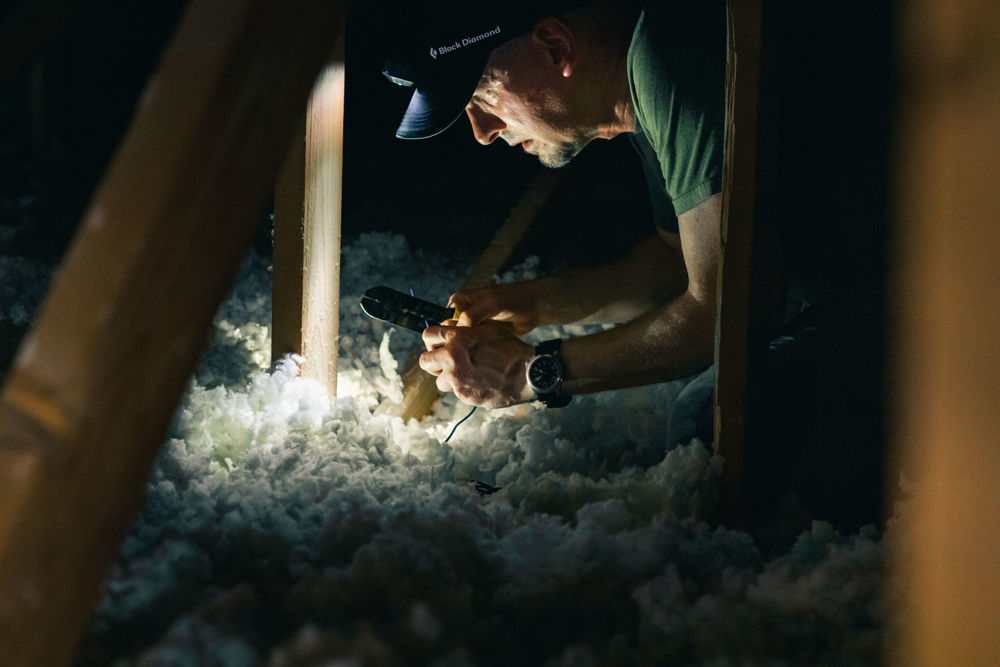
Uninsulated roofs or poorly insulated roofs can allow significant amounts of heat to escape from a house due to the fact that heat rises. Roof and loft insulation of around 300mm is required by the latest Building Regulations, which can either be rolls of insulation materials such as wool, rigid insulation boards or spray foam insulation. When implementing roof insulation, it is crucial to ensure that there are no gaps in the insulation as this will simply allow the heat to pass through the gap and reduce the benefit of the insulation.
With an estimated lifespan of 40 years, it is predicted that loft insulation will pay for itself many times over. If you can access the loft easily and it does not suffer from any damp problems, you can install the insulation yourself. If you already have loft insulation, it is important to check that this is all intact and there are no gaps where heat may be leaking out.
How Is Heat Lost Through A Floor?
Depending on the type of floor a property has, floors can contribute towards substantially heat loss. Suspended timber ground floors particularly, commonly found in older properties, allow a large amount of heat to pass through draughts can benefit from insulating measures such as wool being applied underneath the floorboards. In properties with solid floors, rigid insulation boards can be laid underneath carpets to maximise the insulation of the floor.
As a guide, laying mineral wood insulation underneath timber floors could save you about £110 a year in energy bills, as estimated by the Energy Saving Trust.

How Is Heat Lost Through Windows?
Windows allow air to pass through small draughts or simply through single glazing windows. Double or triple glazing windows are an effective way to prevent heat loss through windows, although not always the most affordable option. It is important to make sure the seals on your windows are air tight, as any old, loose window fittings will allow air and heat to leak out of the window. The reality is, while windows contribute to heat loss in a house, the surface area of a window is much smaller than the walls for example, so the proportion of heat that is lost will always be lower than other areas around the house.
Replacing single glazing with A++ rated double glazed windows could save up to £235 a year and 405kg of carbon dioxide, according to the Energy Saving Trust. When trying to get a guide for the energy efficiency of a window, check for the ‘u-value’ of the window which will be displayed on the energy label.

How Is Heat Lost Through Draughts?
Any nooks and crannies will allow heat to escape through your house and are often the most overlooked part of trying to reduce the heat loss in a house. While sometimes obvious, there are always small, hidden gaps where heat will escape if given the opportunity. The Energy Saving Trust estimate that draught-proofing a property can save a typical semi-detached property £60 per year in energy bills. The main areas to draught-proof are windows, doors, chimneys & pipework, which will all contribute to heat escaping a property.
Draught excluders at the bottom of external doors, draught-proofing strips around window frames and applying silicone fillers around pipework can all help to prevent heat from passing through draughts, helping to keep the warmth in and also importantly the cold out.
How Is Heat Lost Through Walls?
Heat loss through walls is a complex issue that can be caused by any number of things. Accounting for as much as 35% of heat loss in houses, walls are the single biggest cause of heat loss. This is simply due to the fact that walls account for the largest surface area of the house, meaning when the walls are poorly insulated, they allow a huge amount of heat to pass through fabric of the building.
In order to establish the factors that contribute to heat loss through walls, it is important to discuss the different types of walls you find. There are two types of wall construction; solid wall and cavity wall.
Solid Walls Vs Cavity Walls
Solid walls consist of one single wall, while cavity walls use two walls with a gap between them. This cavity was designed to reduce water ingress. Exterior materials like brick, stone or render are porous, so they absorb moisture. Wind-driven rain can saturate these materials, and when this trapped moisture freezes, it expands and causes cracks.
Water ingress leads to penetrating damp, creating wet patches and black mould. In solid walls, moisture can travel straight from the outside to the inside because there is no barrier, meaning these walls can hold large amounts of water and dry out slowly. In cavity walls, damp can also occur when cavity wall insulation is poorly fitted, as it can create a bridge that allows moisture to pass from the external wall into the internal wall.
This matters for heat loss because just 5% moisture content can reduce a material’s insulation by 50%. Wet walls lose heat much quickly, just like wearing wet clothes makes you feel colder.
 How To Keep Walls Warm
Wall insulation
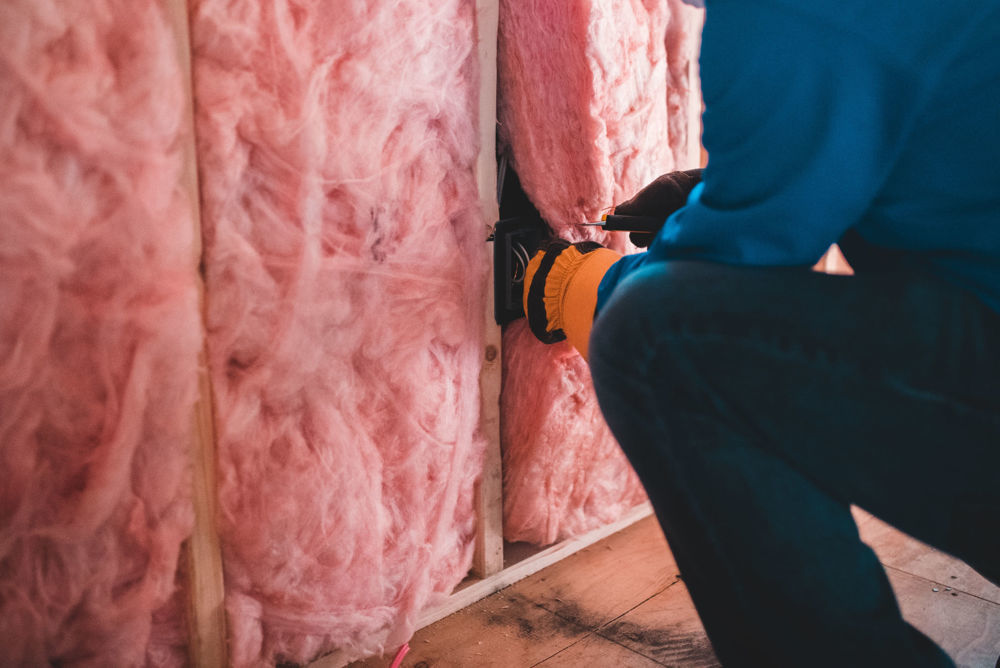
Wall insulation can be added in several ways, depending on the property. The most common is cavity wall insulation, installed during construction using insulation boards or added later by injecting insulation through small holes in the exterior wall. For properties with a solid wall, or when cavity wall insulation isn’t suitable, internal insulating boards can also be added to the inside of a property, which isn’t always favourable since it can be invasive on the property.
Keeping Walls Dry
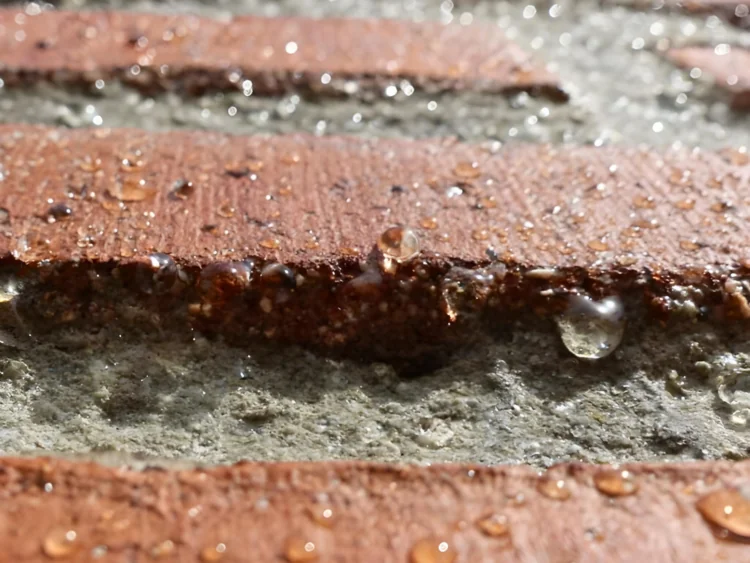
Keeping your exterior walls dry is essential for preventing heat loss, damp issues and long-term structural damage. Masonry is naturally porous, meaning brick, stone and render can absorb significant amounts of water over time. Once moisture enters the wall, it reduces thermal performance, increases the risk of mould indoors and accelerates weather-related deterioration.
There are two forms of treatment; Emperor Masonry Paint, which is available in a range of colours, or Emperor Masonry Creme, which is a clear, invisible treatment. This provides the flexibility to achieve the look you desire, whether you want to give your walls a refresh with a new colour or you want to maintain the natural beauty of your masonry.
Frequently Asked Questions
How do you apply waterproofing products?
Applying a waterproofing treatment is something most people can do themselves. While Emperor Masonry Paint and Emperor Masonry Creme apply differently, the basic steps are similar. Start by cleaning the surface thoroughly using a brush, hosepipe or low-pressure washer, and remove any loose paint. Then apply Emperor Exterior Cleaner to kill organic growth, leaving it for 2–3 hours. Rinse it off if you’re using Masonry Creme and leave it on if you’re using Masonry Paint.
After cleaning, fill any cracks and prime bare masonry if you’re using Masonry Paint so it adheres properly and doesn’t soak in. Masonry Creme should not be primed, as it must absorb into the wall.
To apply, brush the edges and use a long-pile roller for larger areas. Masonry Paint should be applied at 5–6m²/L with up to 8 hours drying between coats. Masonry Creme is applied at 5m²/L and left for 1–2 hours to absorb fully, leaving invisible protection.
Full step-by-step guides: How to apply
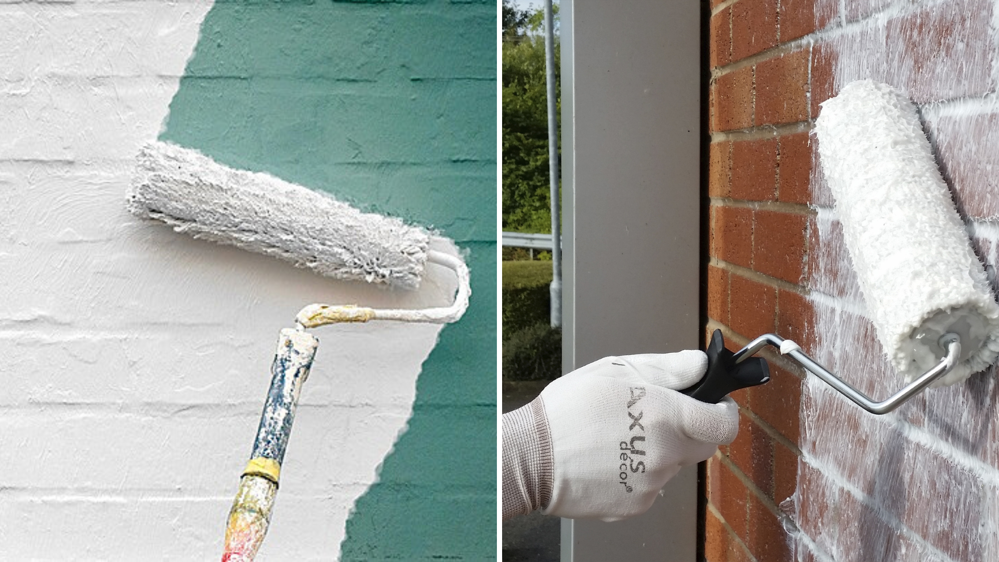
Applying Emperor Masonry Paint (left) and Emperor Masonry Creme (right).
What surfaces can I apply Emperor Masonry Creme to?
Emperor Masonry Creme is a penetrative system which means it works below the surface of a material. It absorbs deep into the substrate and chemically bonds and becomes part of the substrate itself. It can be applied to any natural mineral surface that has not been painted, including brick, stone, concrete and render. If you want to treat a surface that has been painted, either remove this coating or apply Emperor Masonry Paint, which can be applied to any painted surface, or any bare surface once Emperor Exterior Primer is applied.
What other measures can I take?
There are a number of small things we can do to reduce heat loss around the house that are quick and easy. The Energy Saving Trust suggest that fitting your hot water cylinder with an insulating jacket can save as much as £70 a year in energy bills and 155kg of carbon dioxide emissions. Even simple things such as drawing your curtains can help to prevent heat loss through windows, as well as simply adding a thick, woolen rug to draughty floorboards.
Can a cavity wall property without insulation benefit from waterproofing?
When a cavity wall is unfilled, there can often be rubble at the bottom which can allow moisture to bridge the cavity and create a thermal bridge for heat to be lost. For this reason, like properties with solid walls or those with poorly fitted cavity wall insulation, you can see thermal benefits from treating a property with a bare cavity with an external waterproofing treatment.
The only case where you may not see a thermal benefit is if you have cavity wall insulation that is not allowing moisture to bridge into the house. In this case, while you won’t see better insulation, you will get the rest of the other benefits of waterproofing an external wall, such as reducing damage to exterior walls and peeling paint.
We hope we have answered any questions you may have had regarding how to reduce heat loss in a house and the easiest methods of insulation. If you have any other questions, feel free to get in touch with our team of experts who are on hand to assist you. You can chat to them by emailing [email protected] or calling them on 01254 936121. Alternatively, shop our range of products today and get FREE delivery on all orders.


