
Damp Proof Paint – The Expert Guide
Damp proof paint is often surrounded by confusion, with mixed advice about what it is and how it works. To clear things up, our experts have created this straightforward guide to help you understand the facts so you can wave goodbye to damp for good.
In this guide we cover:
- The different types of damp and what causes them
- The types of paint that help with damp
- What paint you need for your home
What Is Damp?
The first step when discussing damp is to establish what exactly we mean when we refer to ‘damp’.
Damp is the excess of moisture within a structure either from an intrusion from the exterior or through a build-up of moisture on the interior of the structure.
To understand damp, it’s important to differentiate the different types of damp that can be found across the house.
There are three common types of damp:
1. RISING DAMP
Rising damp is caused when moisture from the ground travels up through the external walls of a property through a process called ‘capillary action’.
This rising damp is caused either when there isn’t a damp proof course (DPC) or the damp proof course has failed.
A damp proof course creates a water-resistant barrier at the bottom of the wall to prevent the moisture transferring from the ground into the wall, and is present on most buildings.
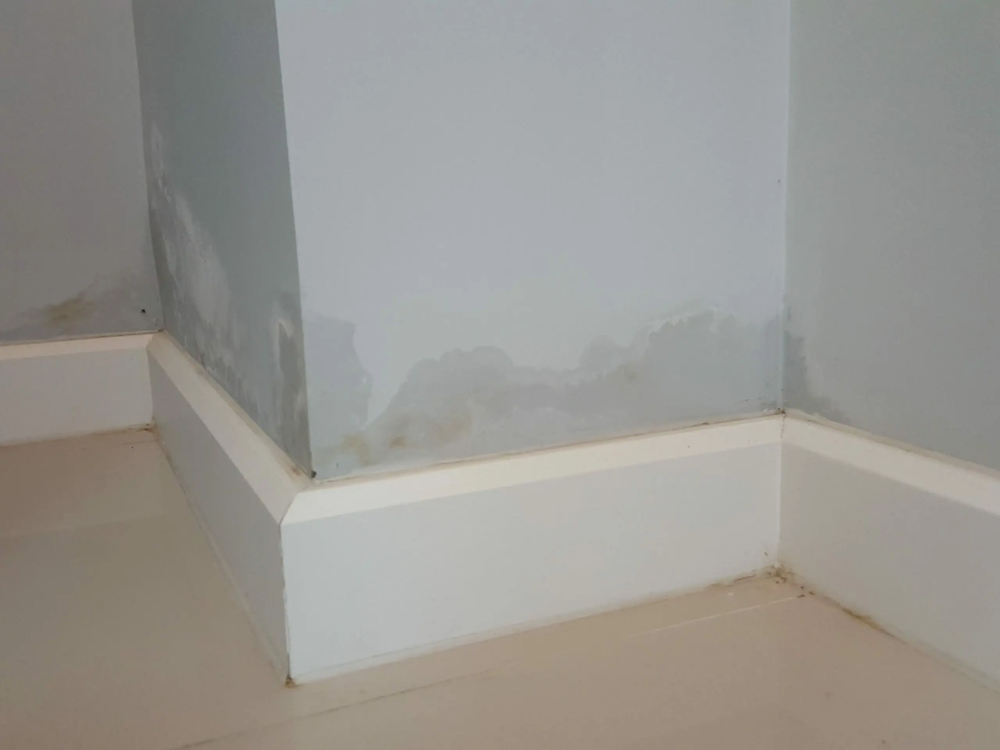
When this fails, moisture can rise up through the ground-level of a property, causing rotting skirting boards and damp patches on interior plaster. This only occurs at the very bottom layer of properties, which helps make it easily identifiable.
Rising damp is the most commonly misdiagnosed form of damp and is generally rare.
2. PENETRATING DAMP
Penetrating damp is caused by an external source of moisture like rising damp, but it can occur at any level of the property.
Contrary to popular belief, exterior masonry walls are porous, meaning they can absorb moisture.
Penetrating damp is caused when wind-driven rain is absorbed by external walls or enters through damage like a crack, causing what is known as water ingress.
Eventually, the moisture can make its way into the internal wall of a property causing large-scale damp problems.
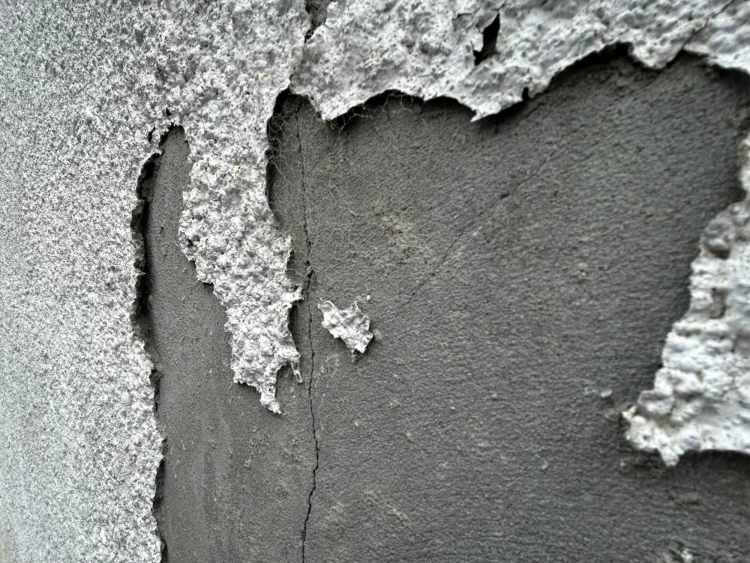
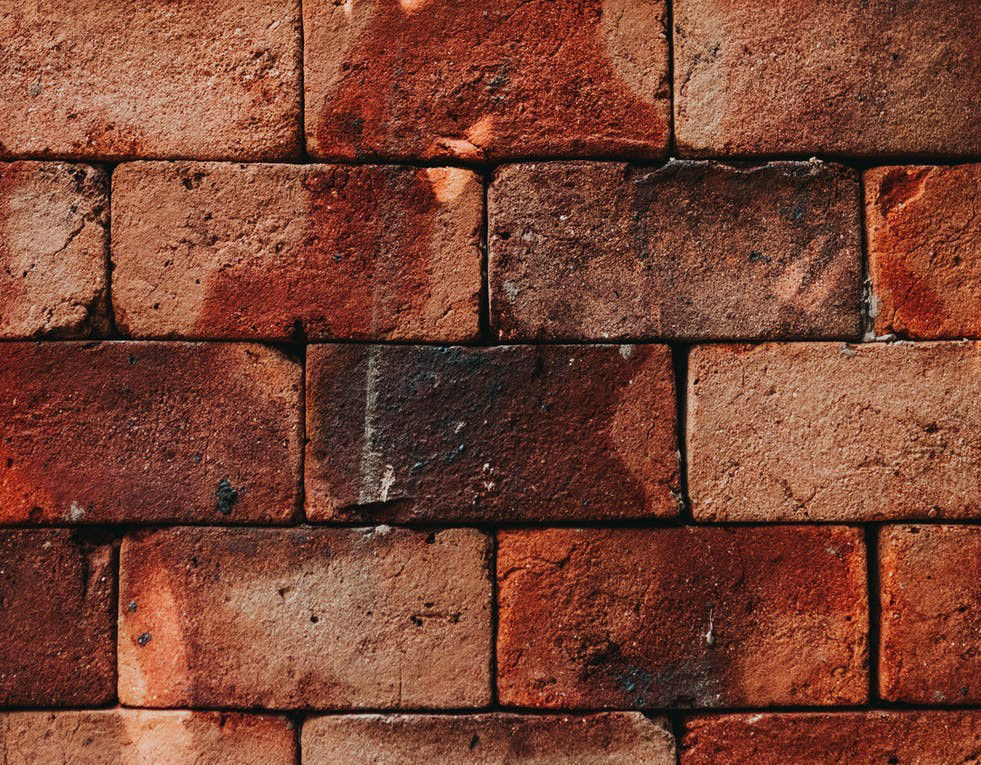
Penetrating damp can be identified by discolouration on external walls, internal mould, walls that are damp to the touch, crumbling plaster and by any signs of damage to the external wall like cracked bricks, peeling paint or crumbling mortar.
3. CONDENSATION
Damp can not only be caused by an external source of moisture, but also by an internal source of moisture.
Through the day-to-day activities within our homes condensation is created, from things like drying clothes and showers.
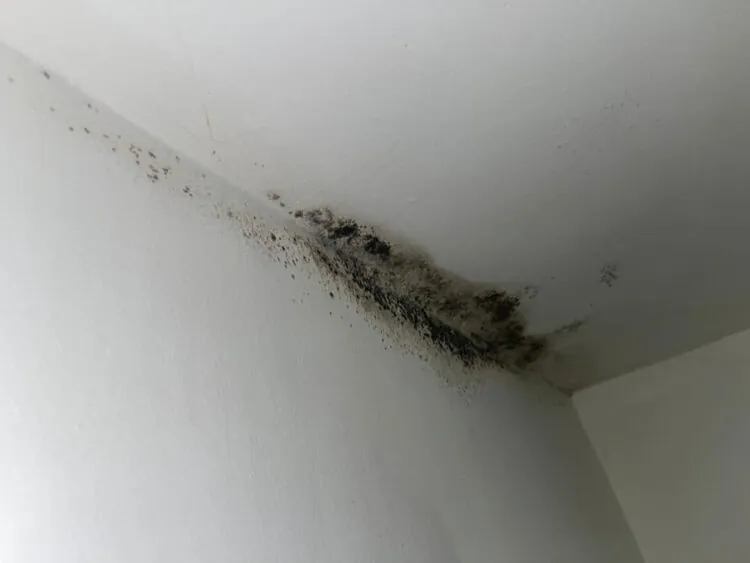
This condensation can gather in areas of poor ventilation and in high moisture rooms, causing mould growth on interior walls. This is especially a problem in areas such as bathrooms and kitchens.
Black mould is the key indicator of damp caused by condensation, as well as water collecting on windows.
What Impact Can Damp Have?
Damp can have a significant impact on the health of your home and those that live in it, so it’s not something to take lightly. The key is to identify the source of the damp as soon as possible and address it.
1. Health Problems
A big symptom of moisture-rich conditions is black mould spots across the internal walls of a property. The NHS advises that exposure to damp and mould can increase the risk of respiratory infections, allergies and asthma.
These problems can worsen over time, as the black mould continues to develop.
2. AESTHETIC DAMAGE
In terms of the structure of your home, damp is both an aesthetic and performance related issue.
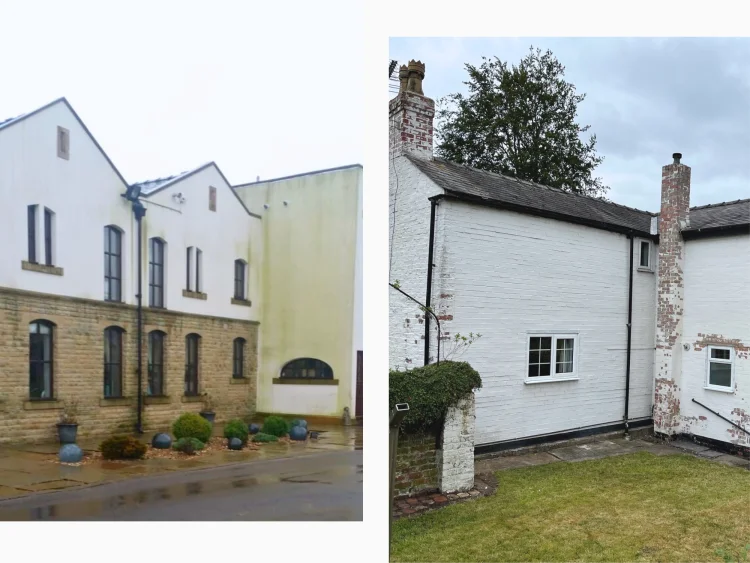
High levels of moisture will lead to peeling paint, damaged plaster, making interior walls difficult to keep looking tidy. On exterior walls moisture encourages the growth of algae, causes staining and leads to paint blistering.
3. STRUCTURAL DAMAGE
Potentially the most damaging symptom of damp problems is structural damage. With penetrating damp in particular, brickwork can crack, which in turn allows more moisture to enter the external wall.
When this moisture undergoes a freeze-thaw cycle, it will expand causing the defect to worsen. This allows more water to enter the wall, creating a continuous cycle of damage that can be very costly to repair.
4. HEAT LOSS
One of the lesser-known side effects of a property that suffers from damp is heat loss.
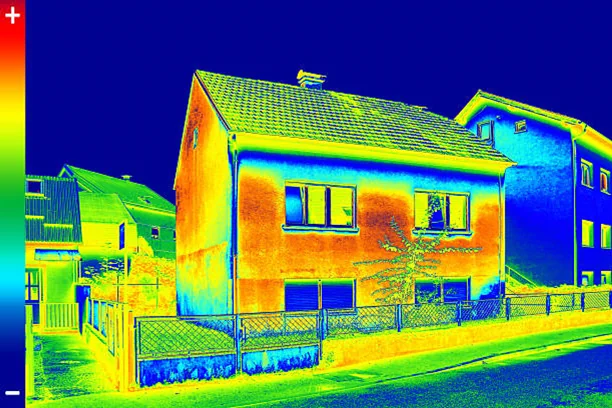
Wet walls transfer heat much quicker than dry walls, meaning lots of heat is lost from a property as the heat is directed to drying wet walls rather than heating the house.
Damp content of 5% can lower the insulating properties of a surface by 50%. This is significant as 35% of the heat that is lost from our homes is lost through the external walls, so damp problems can be an indicator that your home has poor energy efficiency.
By reducing water ingress and by keeping external walls dry, you can significantly improve the energy efficiency of your home.
If you want to see how healthy your walls are, use our handy wall health check to spot issues early and keep your home stress free.
How Can You Damp Proof A House?
Depending on the source of the moisture, there are a number of solutions to preventing damp problems.
RISING DAMP
When it comes to rising damp, this is the most difficult and most expensive type of damp to prevent, as it involves having a professional implement a damp proof course on your property. For this reason, it is recommended that you seek a damp proofing professional regarding your damp problem as soon as possible.
CONDENSATION
For condensation, there are a number of simple steps you can take to reduce damp.
- Improve the ventilation of the room by opening windows regularly.
- Move furniture away from walls to allow air to circulate more effectively.
- Use extractor fans in bathrooms and kitchens.
- In problem areas such as bathrooms and kitchens or rooms where ventilation is poor, it may be necessary to apply an anti-condensation paint.
PENETRATING DAMP
When it comes to treating penetrating damp, you must prevent water from entering the external wall of the property. The moisture can either be finding its way into the wall either by absorbing into the surface or through a defect such as a crack.
To stop penetrating damp, there are two key steps:
1. Repair defects
- Check for cracks in brickwork, damaged render or missing mortar.
- Fill any gaps using a high-quality exterior filler.
- Clear blocked gutters or downpipes that may be causing water to soak into exterior walls.
2. Protect the masonry
Once the structure is sound, the next step is to protect the exterior walls.
A common mistake is using a waterproofing product that seals the surface completely. These coatings are often referred to as sealers and are clear, water repellent treatments that create a plastic film over exterior walls that seal the surface completely.
While this film reduces water absorption, it traps moisture within the wall, only making damp problems worse.
Finding a way to keep water out while still letting walls breathe might sound impossible. Most paints and sealers either trap moisture inside or fail to stop it getting in.
The answer lies in nano-technology, which offers the best of both worlds. This creates a microscopic surface that causes raindrops to roll off the wall instead of soaking in, while still allowing water vapour to escape as it does not seal the surface. The result is a wall that stays dry and protected.
This technology is built into two products designed for different needs.
- Emperor Masonry Creme – an invisible treatment that absorbs into bare brick, stone or render without changing the wall’s appearance.
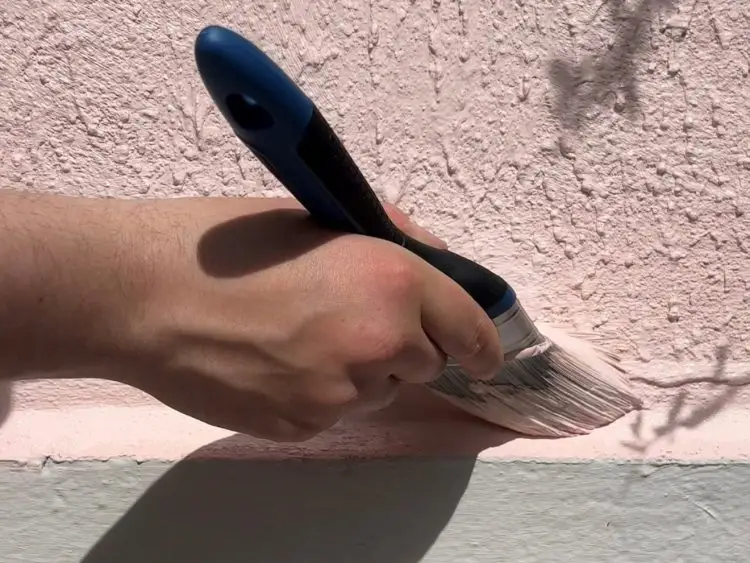
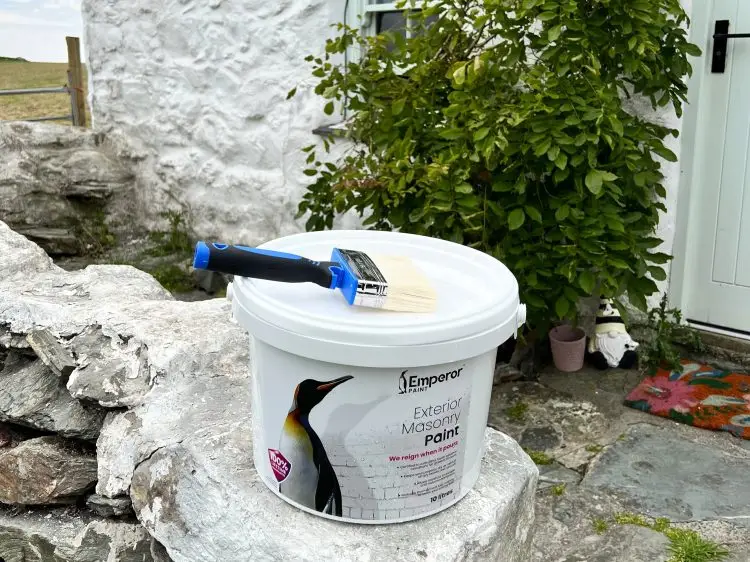
- Emperor Masonry Paint – offers the same long-term protection, in a coloured finish.
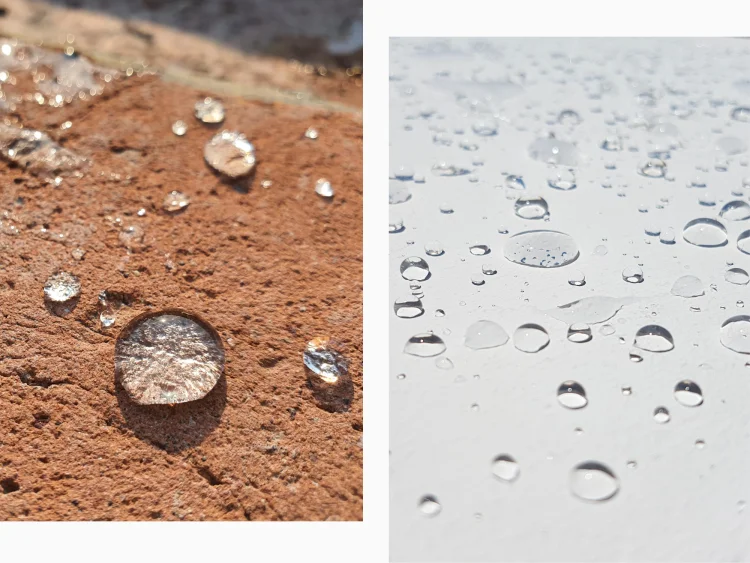
Independent tests showed both reduced water absorption by up to 96% while not reducing the ability for the wall to breathe with SD values of 0.01 and 0.03. (An SD value measures how breathable a surface is – anything under 0.5 is considered breathable, with anything under 0.2 considered highly breathable).
By preventing a build-up of moisture, they also were found to withstand harsh weathering for 25 years without any change in appearance or performance, which is why they come with a lifetime guarantee.
Learn more: How nano-technology works
Frequently Asked Questions
Do cold walls mean damp?
Cold walls and damp walls are closely linked, but one often leads to the other.
Cold walls can encourage damp because when warm, moist air hits a cold surface, condensation forms.
At the same time, damp walls become cold. When moisture soaks into masonry, it creates a thermal bridge causing the wet surface to lose heat much faster than if it was dry.
Do I have to remove damp before painting?
Whether you are treating an interior or exterior wall with a damp proof paint, the surface must be completely dry.
If you apply paint while it is wet, the paint will struggle to adhere to the surface. You should also ensure that there is no surface mould, as this will also prevent the paint from doing its job.
On an interior wall, clean the wall down with a cloth and a cleaning solution such as an interior cleaner and degreaser.
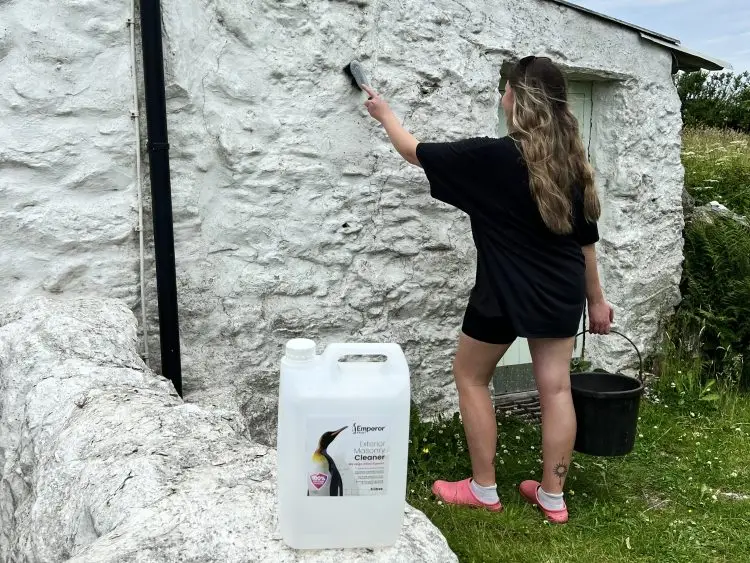
For exterior surfaces, apply a fungicidal cleaner which will decontaminate the surface ready to paint.
Want help on how best to tackle your damp? Our in-house team of experts are always here should you need us. You can reach them by emailing [email protected] or calling 01254 936121.
Ready to start? Take our handy quiz to get personalised recommendations and find the right products for your project in just 5 minutes.
This article was written by the Emperor Technical Team, a group of experts with an average of over 25 years experience in the building industry. They work daily with homeowners, tradespeople and specification professionals to deliver practical, expert guidance that promotes long-term results, supports wall health and helps create homes that are prepared for the future.