

Water Ingress – The Ultimate Guide
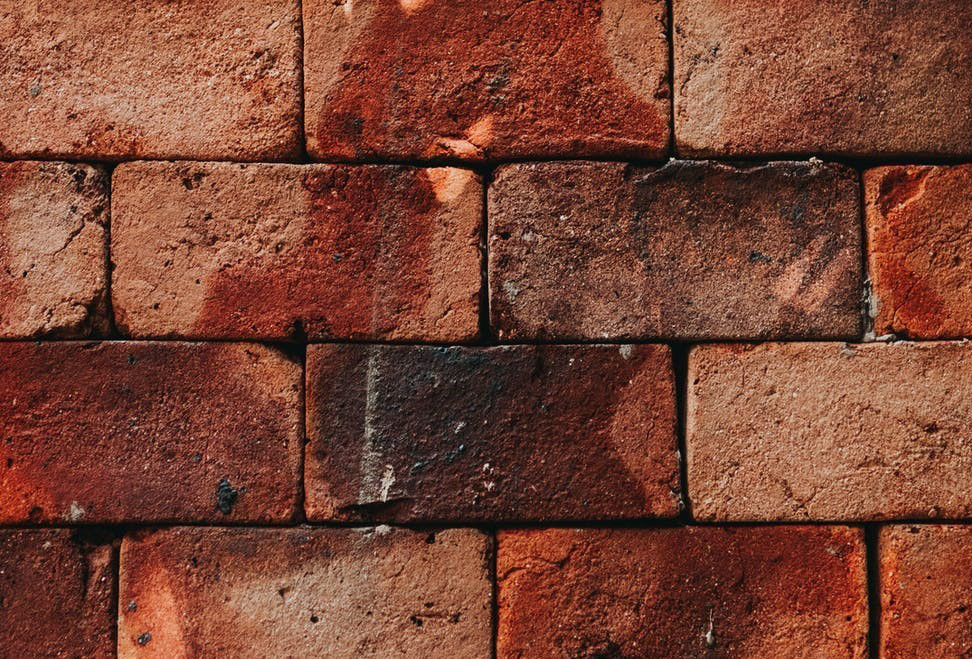
Water ingress is an increasingly prominent problem in the UK today, often linked to ageing brickwork, harsh weather and poor maintenance. If unresolved, it leads to damp, mould, structural damage and costly future repairs, so taking action is important.
Our technical team supports homeowners with a wide range of issues, but in recent years they’ve seen a steady rise in the number of cases linked to moisture and damp. In fact, up to 6.5 million UK households could be affected by damp and mould according to a recent report.
In this guide we will cover:
- What water ingress is
- How you can identify the causes of water ingress
- How you can prevent water ingress at home
What Is Water Ingress?
Water ingress is the movement of moisture into a building from the outside, through roofs, walls, windows or doors. It is also often referred to as penetrating damp because the moisture passes through the external structure into the interior.
Any amount of water ingress can be a problem for your home, but larger amounts of moisture can lead to damp, damaged brickwork and even health concerns, so it’s essential to tackle it at source as early as possible.
Learn more: The difference between penetrating damp, rising damp and condensation
What Causes Water Ingress?
Water ingress happens when moisture finds its way into a property, so naturally pinpointing the exact source can be complex.
Often there is a combination of factors rather than one single fault. This is something we see regularly in the UK’s ageing housing stock, where around one in five homes are over 100 years old, according to Historic England.
The most common sources of water ingress are:
- Ageing brickwork – As bricks age they become more prone to water ingress, which can lead to them absorbing large amounts of moisture during rainfall.
- Damaged brickwork – Cracked bricks, missing pointing and spalling brick faces all create an easy entry point for water ingress. Over time, these problems worsen, accelerating decay.
- Roofs – Missing, cracked or slipped tiles all let water directly into the fabric of your home.
- Blocked gutters – Overflowing gutters are a common, easily rectified cause of penetrating damp, as it can expose masonry to high levels of moisture when they channel water down exterior walls.
- Windows – Flashing around window frames can lead to moisture penetrating exterior walls.
- Rising damp – When a damp proof course fails or is missing, moisture from the ground moves up through the bottom course of bricks, causing damp on internal walls.

What Are The Signs Of Water Ingress?
When trying to tackle water ingress, the first step is to inspect your home for visible signs of moisture. These often appear on both the exterior and interior sides of your home.
On the inside of your home check for:
- Damp patches on walls or ceilings
- Peeling paint or wallpaper
- Black mould growth
- Musty smell
- Walls feel damp and cold to the touch
Tip: If damp patches appear on internal partition walls, the cause may be condensation or leaks rather than water ingress.
On the outside of your home check for:
- Damp or discoloured patches on both the exterior wall
- Damaged brick, cracked render or crumbling mortar
- A white powdery deposit called ‘efflorescence‘
- Organic growth such as algae or lichen
- Staining beneath gutters, downpipes or window sills
- Peeling paint
These signs often vary depending on how your home is built. In solid wall properties, moisture can transfer straight through from out to in, making damp patches inside more common.
In cavity wall homes, damaged or poorly installed insulation also creates this bridge for moisture to soak through on to internal walls. When cavity walls have no insulation, the gap between the exterior and interior wall means damp patches are unlikely on the inside. In these cases, exterior damage like cracked bricks or peeling paint is your key indicator of water ingress.
It’s also worth noting that water ingress doesn’t always require a defect. All masonry, whether brick, stone, concrete or render, is porous and will absorb some water during rainfall. This alone, particularly in harsher coastal and rural climates, is enough to cause damp and other problems associated with water ingress.
If you want to see how healthy your walls are, use our handy wall health check to spot issues early and keep your home stress free.
How To Prevent Water Ingress
1. REPAIR DEFECTS
Preventing water ingress starts with repairing any defects that allow water into your home. These can appear across walls, windows and the roofline, so each should be addressed if needed before taking other measures.
Walls
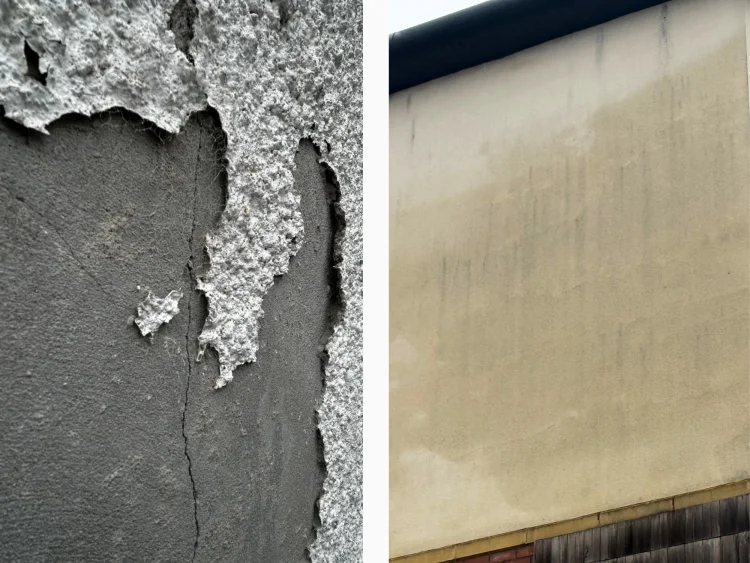
Cracks in brickwork and render, missing pointing or spalling brick faces all give water an easy route into your exterior wall.
Left untreated, these areas worsen as moisture freezes and expands. The movement causes these issues to worsen, allowing more water to enter and creating a cycle of damage.
If you see this kind of damage, often it is a sign the water ingress has already begun.
If an investigation does not show any signs of water ingress on exterior walls, then it is crucial to analyse any other potential causes.
Learn more: A homeowners guide to repairing exterior walls
Windows
If you have identified leaking windows may be the issue, caused by gaps around the window frame, there are a few options to resolve this. The solution depends on the location of the fault.
If the gap is between the window frame and the glass, then re-sealing the gaps may be in order.
If the gap is between the window frame and the exterior wall, then you will have to re-point this gap. Both of these can be done either by yourself or by a professional, depending on your level of confidence.
Roofline
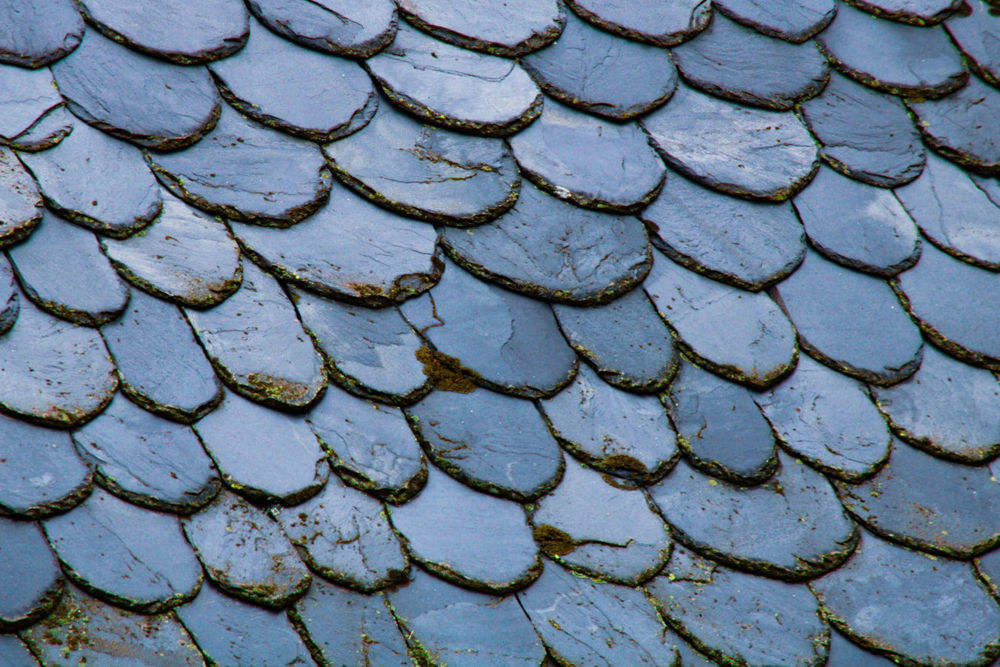
Replacing slipped or broken tiles, repairing flashing or resealing joints may all be required if the source of your water ingress is coming from the roofline.
If you have identified blocked or leaking gutters may be the issue, repairing these is a low cost way to help your home stay dry in any case.
Due to working at heights, a roofing professional is recommended to carry out the work safely and to recommend the best long-term fix.
2. REDUCE WATER ABSORPTION
A common misconception is that materials like brick and render keep water out. In reality, all of them absorb moisture to some degree, and this moisture is what can cause issues even to a well-maintained home.
Whether or not repairs are required, this is why reducing water absorption matters if you want to protect your home from future damage.
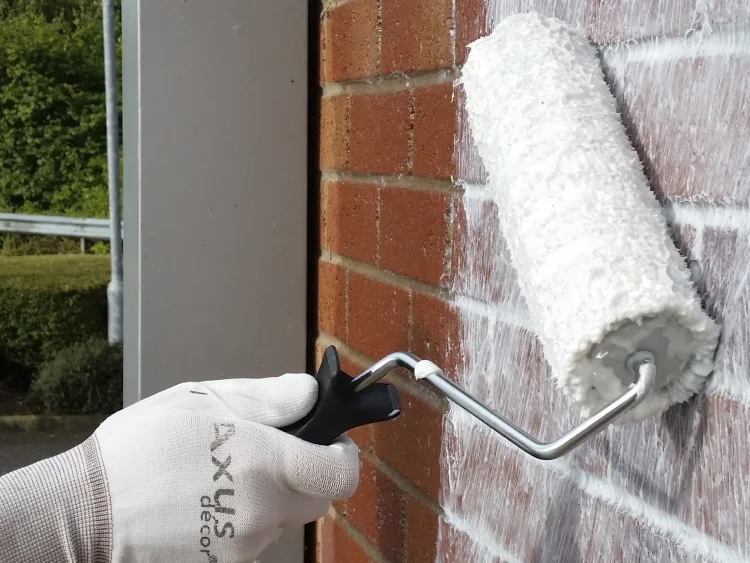
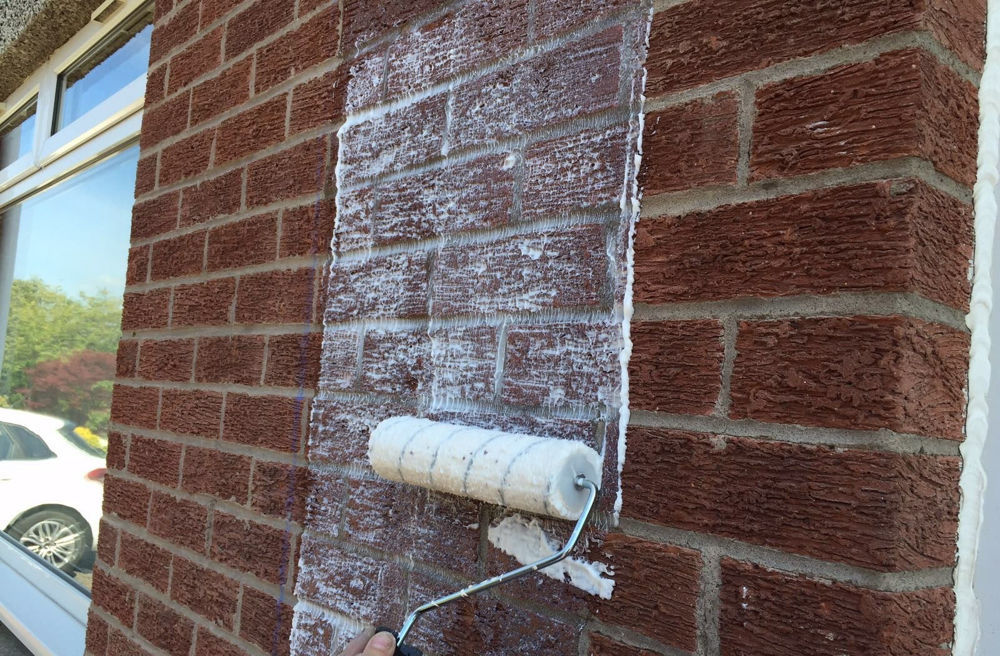
To prevent this, there are a number of products that can be applied to exterior walls to help reduce rain soaking into the wall.
These products come in three forms:
- Masonry paint – A coloured paint that adds a decorative finish while naturally reducing water absorption. Available in a range of formulations depending on performance and durability.
- Masonry cream – A clear treatment that penetrates deep into the masonry, creating a water repellent surface while maintaining the natural look of the masonry.
- Masonry sealer – An invisible coating that creates a transparent seal over masonry. While this plastic film limits water penetration, many sealers aren’t breathable which can trap moisture inside the wall.
WHY BREATHABILITY MATTERS
The single most important feature for a product that is designed for exterior walls is breathability.
Breathability refers to how easily water vapour can naturally pass through a material.
If a product is not breathable, it will cause moisture to build-up underneath the coating. This trapped moisture forces pressure against the coating, leading to it failing.
On exterior walls, low breathability products make the problem of moisture worse by locking it in, leading to persistent damp, mould growth and structural damage.
The good news is that breathability can be measured, so you know what you are putting on your home. This is measured using an SD value – the lower the value, the higher the breathability. For a product to be breathable it must have an SD value of below 0.5 by British Standards.
In reality however, a paint or coating should have an SD value of 0.1 to be considered highly breathable.
CHOOSING BREATHABLE PROTECTION
At first, a product that reduces water absorption while still being breathable sounds like a contradiction. Traditionally, coatings achieved one or the other. Sealers create an impermeable barrier that reduces moisture movement both ways, while finishes like limewash are highly breathable but offer little protection from weathering.
In recent years however, advances in paint science have changed this. Nano-technology has made it possible to create treatments that repel rainwater while also remaining highly breathable.
What is nano-technology? Instead of forming a film over the surface, these treatments work by lining the pores of masonry. Water droplets are too large to pass through, so they form beads that simply roll off the surface. At the same time, water vapour as a gas is free to naturally escape the surface.
Learn more: The science behind nano-technology

This clever technology is available in two forms, depending on the appearance of your home:
- Emperor Masonry Paint – A coloured paint that decorates exterior walls.
- Emperor Masonry Creme – A clear treatment that doesn’t change the appearance of natural bricks, stone or render.
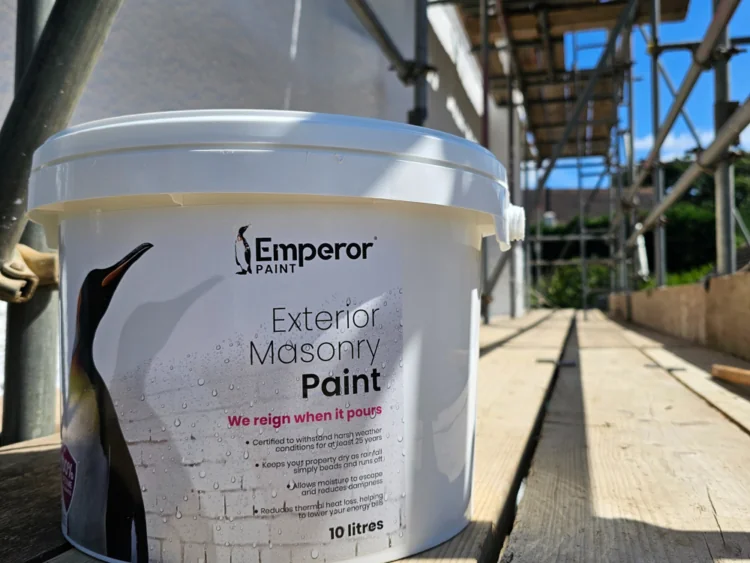
An independent laboratory tested both products against the challenges exterior walls face over time to identify how they could help homeowners deal with water ingress.
They were both subjected to a 25 year weathering test to identify their durability, breathability and resistance to weathering.
The results showed:
- No breakdown in performance or appearance after 25 years of harsh weathering
- Walls treated absorbed up to 96% less water than untreated walls
- They remained highly breathable, with SD values of 0.01 and 0.03 respectively
With independent testing demonstrating they will far exceed a 25 year performance, both Emperor Masonry Paint and Emperor Masonry Creme come with a lifetime guarantee.

Projects featured: The Forge using Emperor Masonry Paint and My Home Farm using Emperor Masonry Creme.
Preventing Future Problems
While reducing water absorption and maintaining breathability is important for properties that currently suffer from water ingress, it is also just as important for homes that have not yet developed problems.
By protecting walls before damage occurs, you prevent moisture becoming an issue, avoiding future damp, decay and costly repairs.
This preventative approach is becoming more important in the UK as our weather patterns shift. According to the Met Office, extreme rainfall could become up to 4 times more frequent by 2080.
Taking steps now can help prepare your home for the increase in likelihood of water ingress and give you the peace of mind that you have taken measures to protect the long-term condition and value of your property.
Frequently Asked Questions
Will masonry paint prevent water ingress?
Masonry paints, like many products designed for exterior walls, vary widely in performance across water resistance, breathability and durability.
Standard masonry paints often provide a degree of weather resistance, but are not always water repellent. Furthermore, as acrylic-based formulations, most lack the breathability required to adequately deal with water ingress.
To genuinely prevent water ingress, a masonry paint must repel water while remaining highly breathable, which the vast majority of masonry paints in the UK fail to achieve unless they are formulated with nano-technology.
What is the difference between water ingress and damp?
Water ingress and damp may seem synonymous but there is a difference.
Water ingress is the source of the problem, while damp is the result of the problem, most often seen as penetrating damp on interior walls.
Do I need a professional to fix water ingress?
Not always. Simple issues such as blocked gutters, small cracks, gaps around windows and general water absorption on exterior walls can all be addressed at home yourself.
For more serious problems, such as roof damage or extensive repointing, it is best to seek professional advice.
Is water ingress covered by home insurance?
Often, standard home insurance does not cover water ingress that develops gradually through ageing brickwork or poor maintenance.
Insurers generally cover problems related to a sudden or unexpected event.
If you’re unsure, it’s best to check the wording of your policy or speak directly with your insurer.
Did water ingress cause my paint to peel?
If your exterior walls are peeling, there are two main reasons why this could be.
Firstly, there could have been poor preparation when the paint was applied that meant that paint did not form a solid bond to the wall.
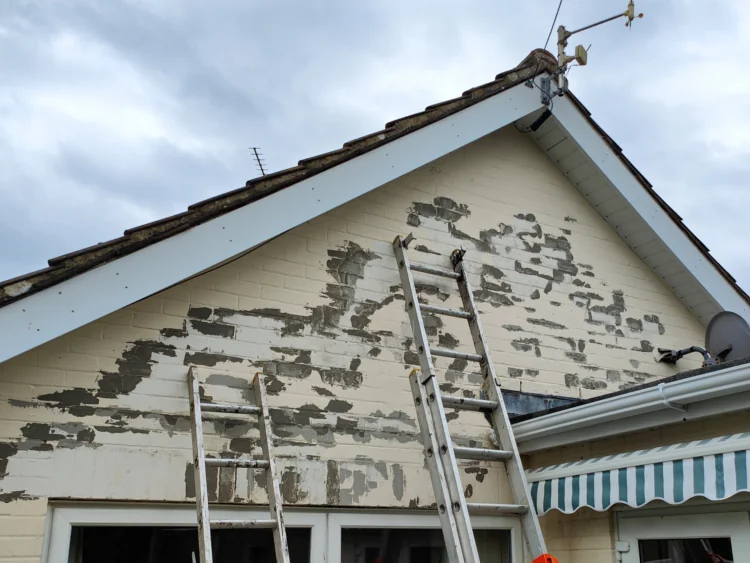
Secondly, and in the vast majority of cases, the cause is moisture. By preventing moisture entering the wall while still allowing it to naturally breathe, you can avoid the pressure build-up that causes peeling paint, while also protecting the masonry beneath.
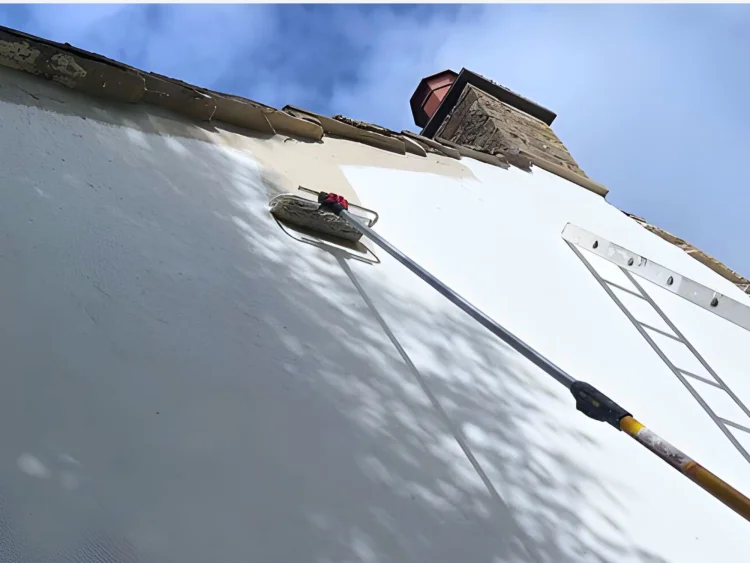
With extensive experience helping homeowners keep their home dry and protected, whatever the issue, our technical team is able to give you the guidance you need to complete your project in confidence.
If you have any questions or would like tailored advice specifically for your home, feel free to chat to us by emailing [email protected] or calling 01254 936121.
Ready to start? Take our handy quiz to get personalised recommendations and find the right products for your project in a few clicks.
This article was written by the Emperor Technical Team, a group of experts with an average of over 25 years experience in the building industry. They work daily with homeowners, tradespeople and specification professionals to deliver practical, expert guidance that promotes long-term results, supports wall health and helps create homes that are prepared for the future.


